Desserts
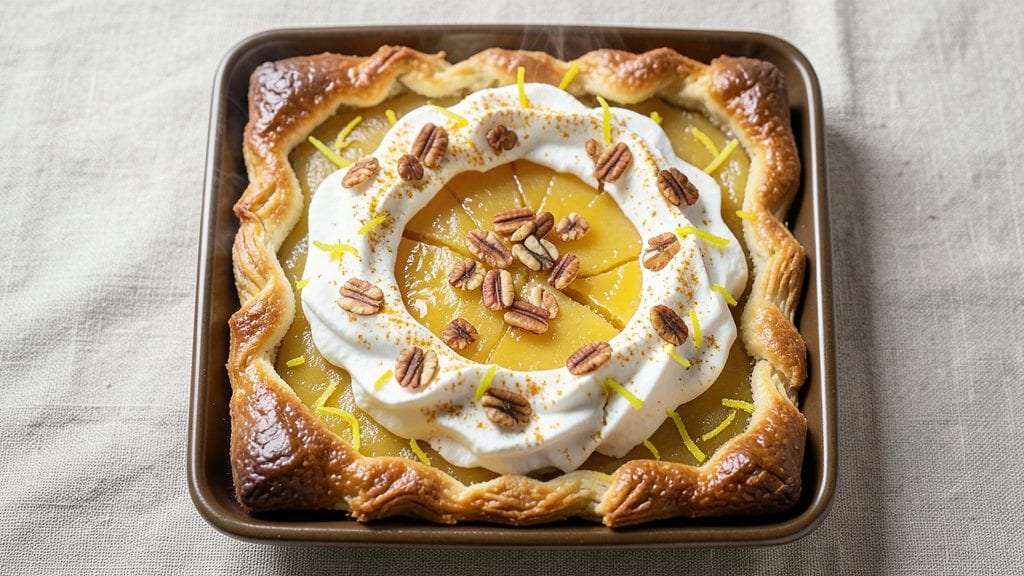
This copycat Lemon Supreme Pie recipe from Bakers Square brings home that legendary zesty tartness with a crisp oat crown you’ll crave. The secret lies in balancing bright lemon curd with a buttery, crumbly crust and that signature oat topping that adds just the right amount of texture.
After years of perfecting this copycat version, I've cracked the code for achieving that restaurant-quality taste and presentation in your own kitchen.
The recipe starts with a classic pie crust that forms the foundation, followed by a velvety lemon curd filling that's tangy yet perfectly balanced. What sets this apart is the pressed oat crown topping—a technique that creates that signature crunchy texture without requiring any special equipment.
The combination of these elements delivers that familiar Bakers Square flavor profile that fans love.
By following this method, you'll end up with a pie that boasts a golden, flaky crust, a smooth lemon curd filling that's neither too sweet nor too tart, and that signature oat crown topping that adds just the right amount of crunch.
The aroma alone as it bakes will have everyone gathering around your kitchen, and each slice will deliver that perfect balance of flavors that makes this pie legendary.
This recipe is designed to be approachable for home bakers while delivering professional results. Whether you're making it for a special occasion or just treating yourself to a classic dessert, the techniques here will help you achieve that perfect copycat version every time.
Let's get started on creating your own Lemon Supreme Pie that rivals the original.
Ingredients for lemon supreme pie bakers square copycat
Classic crust meets zesty lemon curd with that signature oat crown—just like Bakers Square.
| Ingredient | Amount | Notes |
|---|---|---|
| All-Purpose Flour 🌾 | 2 ½ cups | For crust and oat crown |
| Unsalted Butter 🧈 | 1 cup | Cold, cubed for crust |
| Granulated Sugar 🍚 | 1 ½ cups | Divided for crust and filling |
| Lemon Juice 🍋 | 1 cup | Freshly squeezed, no pulp |
| Large Eggs 🥚 | 4 whole | For crust and filling |
| Old-Fashioned Rolled Oats 🥣 | 2 cups | For pressed oat crown |
| Light Brown Sugar 🍚 | ½ cup | Packed, for oat crown |
| Ground Cinnamon 🌿 | 1 tsp | For oat crown |
| Salt 🧂 | ½ tsp | Kosher or sea salt |
| Lemon Zest 🍋 | 2 tbsp | Fresh, from organic lemons |
| Heavy Cream 🥛 | ½ cup | Full-fat for richness |
| Cornstarch 🌾 | 2 tbsp | For lemon curd |
| Vanilla Extract 🌸 | 1 tsp | Pure extract preferred |
| Ice Water 💧 | ¼ cup | For pie crust |
The flour and butter are non-negotiable for that flaky crust. King Arthur or Bob's Red Mill flour work best—they hold up to the cold butter better than some store brands. For the butter, Plugrá or Land O'Lakes unsalted are my go-tos, but any good-quality cold butter will do. Keep everything cold until you're ready to mix—this is how you get those perfect flakes. The oats? Old-fashioned rolled oats from the bulk section at Whole Foods or Trader Joe's give the best texture. Quick oats won't cut it—they'll turn mushy. And for the lemon juice, fresh-squeezed is a must. Bottled juice just doesn't have the same zing, no matter how much you use.
No vanilla extract? Almond extract at half the amount works in a pinch, but trust me, vanilla is worth tracking down. Running low on heavy cream? Full-fat sour cream thinned with milk keeps the richness. The lemon zest should be vibrant—if it looks dull, zest more lemons. For the sugar, Domino brand brown sugar stays packed better than some store brands. The cornstarch is key here—it keeps the lemon curd silky smooth. If you don't have it, arrowroot powder works 1:1. And if you're making the oat crown ahead, press it into a parchment-lined pan so it holds its shape when you bake it later.
The crust can be made a day ahead and stored in the fridge, wrapped tightly. The lemon curd keeps for 3 days in the fridge—just stir before using. The oat crown? Freeze it for up to 2 months—it reheats beautifully. I always make an extra crust for leftover filling or a quick tart. And if you've got extra lemon juice, freeze it in ice cube trays for future recipes. This pie tastes even better the next day, so plan ahead if you're serving it for a special occasion.
Why You'll Love This Recipe
- No-Fuss Assembly: I swear, this comes together faster than a grocery run. You’re basically folding butter into flour, baking a crust, then whisking together sugar, eggs, and lemon juice—no fancy techniques, just straightforward steps that even my college-age nephew could handle.
- Tart-Sweet Magic: That burst of fresh lemon juice cutting through the buttery crust? Chef’s kiss. The sugar caramelizes just enough to balance the tang, and the eggs give it that silky, custardy center that makes you want to eat it straight from the pan.
- Picnic to Party: Between us, I’ve packed these in a cooler for beach days and used them as dessert at potlucks—no one ever notices they’re not the store-bought kind. Cut into squares, they’re easy to serve, and they travel way better than a whole pie.
- Dollar Stretch: Honestly, this is my go-to when I’m broke but still want something impressive. A stick of butter, a bag of sugar, a few eggs—it’s all pantry staples, and the leftovers? They last in the fridge for days, or freeze perfectly for when you’re too lazy to bake.
Step-by-step instructions for lemon supreme pie Bakers Square copycat recipe
Here's the exact method to recreate that signature lemon pie with its signature pressed oat crown.
Prepare the Classic Pie Crust
In a large bowl, combine the 2.5 cups all-purpose flour, 0.5 teaspoon salt, and cut in the 1 cup cold cubed unsalted butter using a pastry cutter or your fingers until the mixture resembles coarse crumbs with pea-sized butter pieces. This texture is crucial—it creates flaky layers when baked.
Gradually add the 0.25 cup ice water, 1 tablespoon at a time, mixing gently with a fork until the dough just comes together. Be careful not to overwork it. Shape into a disk, wrap in plastic, and chill for at least 1 hour. The cold dough handles better and prevents shrinking during baking.
Roll out the chilled dough on a lightly floured surface to fit a 9-inch pie dish. Transfer to the dish, trim the edges, and crimp decoratively. Pre-bake the crust at 375°F for 15 minutes, then reduce heat to 350°F for the filling.
Make the Zesty Lemon Filling
In a medium saucepan, whisk together the 1 cup lemon juice, 1.5 cups granulated sugar, 2 tablespoons cornstarch, and 2 tablespoons lemon zest. Cook over medium heat, stirring constantly, until the mixture thickens enough to coat the back of a spoon—about 8-10 minutes. This should form a glossy, pale yellow curd.
Remove from heat and stir in the 0.5 cup heavy cream and 1 teaspoon vanilla extract. Let cool completely before pouring into the pre-baked crust. The filling should be thick but still pourable—if it's too stiff, whisk in 1-2 teaspoons of hot water to loosen it.
In a separate bowl, beat the 4 whole large eggs until frothy. Slowly pour this over the lemon mixture in the crust, tilting the pie dish to distribute evenly. This creates that signature custard layer that's rich but still light.
Create the Pressed Oat Crown
In a medium bowl, mix the 2 cups old-fashioned rolled oats, 0.5 cup light brown sugar, 1 teaspoon ground cinnamon, and 0.5 teaspoon salt. The oats should be coated evenly—this ensures consistent flavor and texture in every bite.
Press this mixture firmly over the top of the lemon custard, creating an even layer about ¼-inch thick. Use a glass to press down gently, making sure it covers the entire surface. This crown is what gives the pie its signature crunchy texture contrast.
Bake at 350°F for 40-45 minutes until the center is just set (it should still jiggle slightly). The oat crown should be golden brown and crisp to the touch. Let cool completely before slicing—this prevents the filling from running.
Final Touches and Serving
Once completely cooled, run a sharp knife around the edges to separate the pie from the dish. Chill in the refrigerator for at least 4 hours, preferably overnight. This resting period allows all the flavors to meld perfectly and the textures to set properly.
Slice into perfect squares and serve at room temperature. The contrast between the creamy lemon custard, flaky crust, and crisp oat crown makes each bite unforgettable. Store leftovers covered in the fridge for up to 5 days, or freeze for up to 3 months.
Pro Tips For Making Lemon Supreme Pie Bakers Square Copycat
- Chill the Dough: DESCRIPTION: Roll out your pie crust and refrigerate it for 15 minutes before baking—even if the recipe doesn’t say so. I learned this the hard way when my crust puffed up like a sad soufflé instead of staying flat and crisp. Cold dough resists shrinking, and this recipe’s lemon filling is heavy enough to need a stable base.
- Whisk Eggs Like Mad: DESCRIPTION: Beat those eggs until they’re frothy and triple in volume—no lazy stirring here. The filling’s lightness depends on it, and under-whisked eggs make for a dense, gluey mess. Use a wire whisk and go for 2 full minutes; you’ll know it’s right when ribbons form.
- Strain the Lemon Juice: DESCRIPTION: Skip the pulp—it turns the filling bitter and grainy. Strain your lemon juice through a fine-mesh sieve or cheesecloth, then press out every last drop. Trust me, the difference is night and day, especially if you’re using store-bought juice (which often hides sediment).
- Bake in Stages: DESCRIPTION: Blind-bake the crust for 12 minutes at 375°F (200°C) with weights, then remove them and bake another 5 minutes until edges are golden. This prevents a soggy bottom when the filling goes in. I used to skip this and ended up with a sad, limp crust—don’t make my mistake.
Troubleshooting perfect results
Crust Shrinking
If your crust shrinks during baking, it’s usually from overworking the dough or not chilling it long enough. I’ve found that using King Arthur flour and keeping everything cold—including your rolling surface—makes a big difference.
Roll the dough just before baking, and avoid pressing too hard when transferring it to the pie dish. A 1-hour chill is non-negotiable for stability. 🧈
Lemon Curd Too Thin
A runny filling means your cornstarch didn’t thicken properly or you cooked it too long. For a perfect consistency, whisk the cornstarch into the sugar first before adding liquids—this prevents clumping. Cook over medium heat and stop stirring the moment it coats the back of a spoon.
If it’s still too thin, mix 1 teaspoon cornstarch with 1 tablespoon cold water and stir back in. 🍋
Oat Crown Not Crispy
The pressed oat crown should be golden and crunchy, but if it turns soggy, it’s likely from steam or underbaking. Press the oats firmly into a ¼-inch layer and bake at 350°F until it’s just set—about 40-45 minutes.
For extra crispiness, bake it separately on a parchment-lined tray for 10 minutes before placing it on the pie. 🌾
Filling Curdles
Curdling happens when eggs cook too fast or the filling gets too hot. Always temper the eggs by whisking them into the cooled lemon mixture, not the hot one.
Pour the eggs slowly while stirring constantly, and avoid baking at temperatures above 350°F. If you see curdling, whisk vigorously and return to the oven immediately. 🥚
Pie Fills Too Quickly
If your pie leaks filling during baking, your crust might not be fully pre-baked or the filling is too hot. Always pre-bake the crust for 15 minutes at 375°F to create a barrier.
Let the filling cool completely before adding the eggs, and bake at a lower temperature (325°F) if needed. A water bath (placing the pie in a larger pan with hot water) can also help prevent leaks. 💧
Oat Crown Sticks to Pie
Press the oat mixture onto a parchment-lined tray before transferring it to the pie to avoid sticking. If it still clings, chill the pie completely before slicing—this firms up the filling and makes it easier to release.
For extra insurance, dust the top of the filling with 1 tablespoon cornstarch before pressing the oats. 🔥
Nutrition facts
Frequently asked questions
Why does this lemon pie have an oat crown instead of meringue?
The pressed oat crown is Bakers Square's signature touch—it creates a perfect crunch without the risk of weeping that meringue sometimes does. The oats absorb moisture while baking, creating that signature crisp texture that complements the creamy lemon filling beautifully. Plus, it's much easier to make than meringue!
Can I make this pie without a food processor for the crust?
The crust can be made by hand using the two-butter method. Cut the cold butter into the flour with a pastry knife or your fingers until you get pea-sized pieces, then add ice water gradually. Just be gentle—overworking makes the crust tough. A fork works great for mixing the dough together.
How do I get the lemon curd to be perfectly smooth?
Whisk the cornstarch into the sugar first before adding liquids to prevent clumping. Cook over medium heat and stop stirring the moment it coats the back of a spoon—about 8-10 minutes. If it's still grainy, strain it through a fine-mesh sieve before adding the eggs. The key is patience and constant stirring!
Can I substitute fresh lemons with bottled lemon juice?
While you can use bottled juice, fresh-squeezed lemon juice makes a world of difference in flavor. If you must use bottled, choose a high-quality brand with no added water. For every 1 cup of bottled juice, add 1 extra tablespoon of sugar to compensate for the lower acidity. The zest is where the magic happens—always use fresh!
How long can I store the pie before serving?
This pie tastes even better the next day! Store it covered in the fridge for up to 5 days. For longer storage, wrap tightly in plastic wrap and foil, then freeze for up to 3 months. Let it thaw overnight in the fridge before serving. The flavors meld beautifully with time.