
Desserts
America's Test Kitchen pie crust recipe delivers the kind of flaky, golden layers that make every pie look like it came from a bakery. The secret lies in precise technique—chilling the dough, handling cold butter, and avoiding overworking the flour.
I've perfected this method after years of testing, and it never fails to impress, even with home bakers.
What sets this crust apart is its all-butter richness, achieved through proper layering and minimal handling. The dough rests in the refrigerator at key stages, which prevents toughening and allows the butter to create those signature flakes.
This isn't just any pie crust—it's the foundation for restaurant-quality desserts you can make at home.
By the time you blind-bake this crust, you'll have a crisp, golden shell with perfectly even thickness—no shrinking, no cracking, just a sturdy base ready for your favorite filling.
The texture is light yet sturdy, with layers so delicate they melt in your mouth. This is the crust that turns ordinary pies into showstoppers.
Whether you're making an apple pie, quiche, or pot pie, this foolproof technique ensures your crust will be the star of the dish. Let's get started on creating layers that will have everyone asking for seconds.
Ingredients for america's test kitchen pie crust
Four simple ingredients transform into golden, flaky layers—no shortcuts, just perfect pie crust every time.
| Ingredient | Amount | Notes |
|---|---|---|
| All-Purpose Flour 🌾 | 2 ½ cups | Sifted for even texture |
| Unsalted Butter 🧈 | 1 cup | Cold, cubed for flakiness |
| Ice Water 💧 | ½ cup | Chilled for precise mixing |
| Diamond Crystal Kosher Salt 🧂 | ½ tsp | Fine grain preferred |
| Granulated Sugar 🍚 | 1 tbsp | For tenderizing flour |
| Large Egg Yolk 🥚 | 1 whole | For binding and richness |
| White Vinegar 🍶 | 1 tsp | Enhances flavor and tenderness |
| Popping Corn or Dried Beans 🌽 | 1 cup | For blind-baking test |
The butter is non-negotiable here. Use unsalted sticks—they're firmer and create better layers. Cut it into 1/2-inch cubes and freeze for 10 minutes before measuring. Land O'Lakes or Plugrá are my go-tos, but any good-quality unsalted works. Flour? King Arthur or Gold Medal are reliable, but avoid bread flour—it's too strong. Sift it first, or you'll end up with a tough crust. The sugar and salt dissolve in the ice water, so measure them precisely—no eyeballing here.
No ice water? Freeze your measuring cup overnight and fill it with tap water. Short on vinegar? Lemon juice at half the amount works too, though it adds a slight tang. The egg yolk is crucial—it binds everything without making the crust soggy. If you're worried about salmonella, pasteurized eggs are a safe bet. For the blind-baking test, popcorn or dried beans are perfect—they're cheap, reusable, and easy to clean up. No popcorn? Uncooked rice or pie weights work just as well.
The dough must rest at least 1 hour in the fridge—don’t skip this. Wrap it tightly in plastic and press it flat to prevent air gaps. For best results, roll it between two sheets of parchment paper to avoid sticking. Leftover dough? Shape it into a disk, wrap it, and freeze for up to 3 months. Blind-baked crusts keep 2 days in the fridge, frozen for 1 month. Reheat at 350°F for 10 minutes to crisp up before adding filling.
Why You'll Love This Recipe
- No-Fuss Technique: I swear by the ice water trick—just tossing in cold cubes while mixing the dough means no overworking, no stress. The butter stays chunky, the crust stays flaky, and honestly? It’s the kind of foolproof method that makes me feel like a pro.
- Crispy-Creamy Magic: That perfect contrast—crisp edges, tender middle—comes from the cold butter cutting into the flour just right. The sugar? Tiny pinch, but it makes the crust sing, especially with something sweet like a berry pie.
- Endless Pairings: From savory chicken pot pies to classic apple, this crust handles it all. I’ve even used it for a cheesy galette when I’m lazy—versatile enough for holidays or weeknights, no excuses.
- Budget-Friendly Staples: Five ingredients, all pantry basics. The kosher salt and sugar are the secret weapons, but they’re cheap and last forever. Between us? This is how I stretch my grocery budget without sacrificing flavor.
Step-by-step instructions for america's test kitchen pie crust recipe
This method guarantees flaky, golden layers every time—no shortcuts, just science-backed technique.
Cut the Cold Butter into the Flour
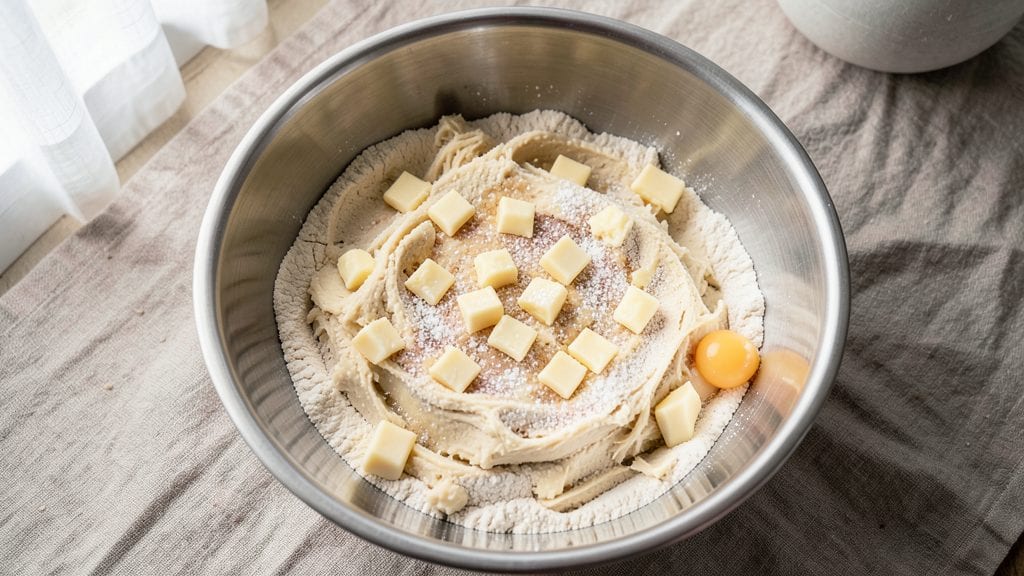
Place the 1 cup unsalted butter (cold, cubed) in the center of the 2.5 cups all-purpose flour in a large bowl. I like to use my fingers to distribute the butter cubes evenly throughout the flour—this ensures even fat distribution for maximum flakiness. Using a pastry cutter or two forks works too, but fingers give you better control.
Cut the butter into the flour until you reach pea-sized pieces with some flour-coated butter still visible. This texture is crucial—it creates the steam pockets that make your crust flaky. Work quickly but methodically; don't rush this step. If the butter starts to soften, chill the mixture for 10 minutes before proceeding. The goal is to maintain that cold, firm texture throughout.
Mix in Wet Ingredients for Perfect Binding
In a small bowl, whisk together the 0.5 cup ice water, 1 whole large egg yolk, 1 tsp white vinegar, 0.5 tsp diamond crystal kosher salt, and 1 tbsp granulated sugar. The vinegar and sugar might seem odd, but they work together to tenderize the gluten and create that signature tender bite. Stir until fully combined—no lumps should remain.
With one hand, gently toss the flour-butter mixture while drizzling the wet ingredients over it. Use a rubber spatula to bring everything together just until the dough forms a shaggy mass. Avoid overmixing—this develops gluten and makes your crust tough. You want to see dry flour patches, which means you've added enough liquid. If the dough feels too dry, add 1 teaspoon ice water at a time until it just comes together.
Form and Chill the Dough Properly
Turn the dough out onto a lightly floured surface and gently shape it into a 1-inch thick disk. I like to press down firmly with the heel of my hand, then fold the edges toward the center—this helps distribute the butter evenly. Wrap the dough tightly in plastic wrap and refrigerate for at least 2 hours (or up to 48 hours).
Chilling is non-negotiable for flaky layers. The cold temperature firms up the butter, preventing it from melting during baking. This resting period also allows the gluten to relax, making rolling out the dough much easier. If you're in a hurry, you can chill the dough for 30 minutes in the freezer, but I find the refrigerator gives better results. The dough should be cold but not rock-hard when you're ready to roll.
Roll and Blind-Bake for Perfect Results
On a lightly floured surface, roll the chilled dough into a 12-inch circle about ⅛-inch thick. I use a rolling pin, but I keep it moving constantly to prevent the dough from warming up. If the dough starts to stick, dust with more flour, but don't overdo it—too much flour makes the crust tough. Transfer the rolled dough to a 9-inch pie dish and trim the edges, leaving about ½-inch overhang. Fold the overhang under itself to create a neat edge.
For blind-baking, preheat your oven to 375°F. Line the crust with parchment paper, then fill it completely with 1 cup popping corn or dried beans. Bake for 20 minutes, then remove the beans and parchment. Prick the bottom of the crust all over with a fork to prevent puffing, then bake for another 10-12 minutes until golden brown. The crust should be set but still slightly soft—it'll firm up as it cools. Let it cool completely before adding your filling.
Pro Tips For Making America'S Test Kitchen Pie Crust
- Chill the Butter First: Take that cold butter straight from the fridge—no thawing, no room-temperature nonsense. The recipe calls for cold butter for a reason: it creates flaky layers, not a greasy mess. I learned this the hard way when I rushed and ended up with a dense, sad crust that tasted more like butter than pastry.
- Measure Salt Precisely: Diamond Crystal kosher salt is not the same as table salt—don’t eyeball it. The recipe’s 1½ teaspoons (or 1 tablespoon total) is non-negotiable. Too little, and your crust tastes bland; too much, and it’ll dry out the dough faster than a hot oven. Use a scale if you’re unsure, or at least level that teaspoon carefully.
- Cut Butter into Flour Dry: Add the ice water last—first, mix the flour, sugar, and salt, then cut in the cold butter until it’s pea-sized. Wet flour sticks to your fingers and ruins texture. Work fast but methodically; this isn’t the step to daydream about your weekend plans. The goal is uniform, cold butter pieces, not a gloppy disaster.
- Rest the Dough Twice: The first rest (30–60 minutes) chills the dough so it handles better, but the second rest (after rolling) is just as critical. Let the rolled-out crust sit in the fridge for 10–15 minutes before transferring—this prevents shrinking and makes it easier to lift without tearing. I know, I know, but trust the process. Your future pie assembly will thank you.
Perfect Pairings for this recipe
Classic Filling Pairings
This crust shines with apple pie—tart Granny Smith apples paired with cinnamon and brown sugar create the perfect contrast to the flaky layers. I use 6 cups peeled, sliced apples tossed with 1 cup sugar, 2 tbsp lemon juice, and 2 tsp cinnamon.
For a modern twist, try peach pie with 3 cups ripe peaches, ½ cup honey, and a pinch of cardamom. The natural sweetness of the fruit lets the crust’s richness take center stage. 🍏
Savory Quiche Variations
Swap sweet fillings for savory quiche—this crust handles cheese and veggie combos beautifully.
My go-to is spinach and feta quiche: sauté 2 cups chopped spinach with 1 small onion, then mix with 8 eggs, 1 cup heavy cream, 1 cup crumbled feta, and ½ cup shredded Gruyère. A sprinkle of nutmeg adds depth.
For a heartier option, add diced ham or mushrooms before baking. The crust stays sturdy enough to hold runny fillings. 🧀
Creamy Custard Combinations
For pumpkin pie, blend 1.5 cups pumpkin puree with 1 can (12 oz) sweetened condensed milk, ½ cup heavy cream, 1 tsp vanilla, and 1 tsp pumpkin pie spice. The crust’s buttery layers prevent sogginess while complementing the spiced filling.
Another winner is chocolate cream pie: mix 2 cups chocolate pudding with 1 cup whipped cream and top with chocolate shavings. The contrast of crisp crust and silky custard is unbeatable. 🎃
Seasonal Twists
In summer, try berry galette—toss 4 cups mixed berries with 2 tbsp sugar and 1 tbsp lemon zest, then fold into the crust. The rustic shape lets the fruit shine while the crust stays golden.
For fall, pecan pie with 2 cups pecans, 1 cup corn syrup, and 2 eggs pairs perfectly—the nutty filling balances the crust’s buttery richness. Winter calls for sweet potato pie, blending 2 cups mashed sweet potato with ½ cup brown sugar and 1 tsp ginger. 🍂
Drink Pairings
Serve apple or peach pie with iced tea—a splash of lemon juice brightens the flavors. For quiche, a crisp Sauvignon Blanc cuts through the richness. Chocolate cream pie deserves espresso martinis or dark chocolate milk.
Seasonal drinks like mulled wine in winter or sparkling lemonade in summer elevate the experience. The key is balancing sweetness with acidity or bitterness to cleanse your palate. 🍷
Nutrition facts
Frequently asked questions
Why does this pie crust recipe use ice water instead of regular water?
The ice water keeps the butter cold, preventing it from melting too quickly during mixing. This maintains the cold fat layers that create flakiness. Regular water would warm the butter faster, leading to a tougher crust. Chilling the water also helps dissolve the sugar and salt more evenly for consistent flavor.
Can I make this crust without a food processor?
This recipe is designed for hand mixing. Use your fingers or a pastry cutter to cut the cold butter into the flour until you get pea-sized pieces. The key is keeping everything cold and working quickly to avoid gluten development. A fork works too, but fingers give you better control over butter distribution.
What's the best way to prevent a soggy bottom in my pie?
Always pre-bake your crust (blind-bake) before adding wet fillings. Prick the bottom with a fork after removing the weights to prevent puffing. For extra insurance, brush the crust with egg wash or apricot jam before adding filling—this creates a moisture barrier. Chill the filled pie for 30 minutes before baking to help the crust set faster.
How do I fix dough that's too sticky or too dry?
If your dough is too sticky, add 1 teaspoon ice water at a time until it just comes together. Too dry? Sprinkle 1 teaspoon cold water over the dough and knead gently. Remember: the dough should hold together when pressed but still have some dry flour visible. Overworking it will make it tough, so handle it minimally.
Can I use this crust for savory dishes like quiche?
This all-butter crust works beautifully for quiche! The rich, flaky layers complement cheese and egg fillings perfectly. Just brush the pre-baked crust with a thin layer of egg wash before adding your savory filling. The crust's sturdy structure holds up well to runny custards, making it ideal for breakfast pies too.