
Desserts
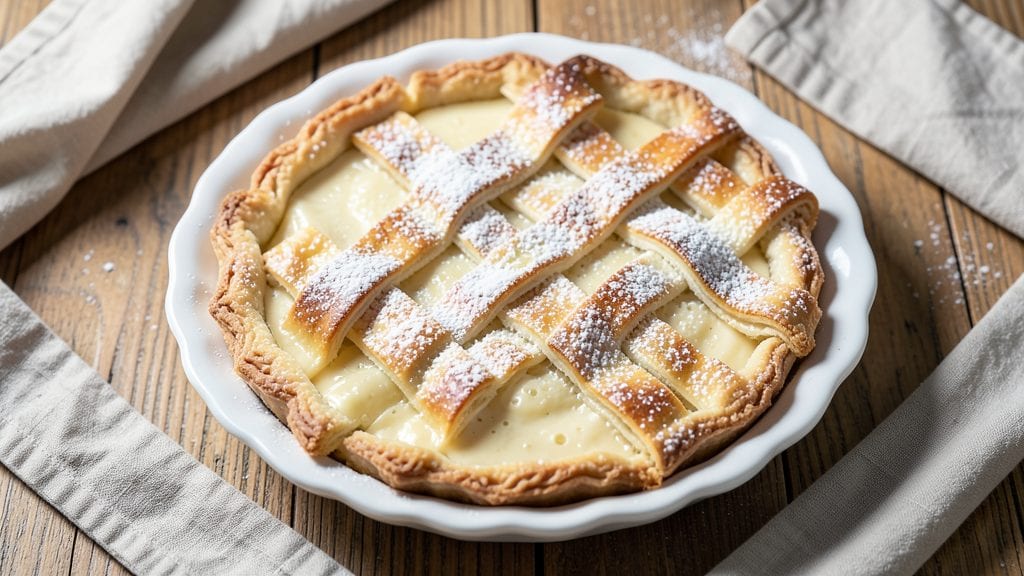
This vanilla pie recipe delivers the perfect balance of creamy custard and buttery crust, with layers that wobble just enough to feel decadent yet stay together.
The secret lies in vanilla bean infusion—real vanilla extract or scraped seeds transform ordinary custard into something luxurious, with deep aromatic notes that linger in every bite. I perfected this technique after years of baking pies that either fell apart or tasted flat, and this version finally cracked the code.
The foundation starts with a foolproof crust that stays crisp yet tender, thanks to a precise blend of butter, flour, and ice water. The filling requires careful tempering of eggs and milk to create a silky, wobbly custard that sets perfectly when chilled.
Baking at the right temperature ensures a golden crust without burning, while a water bath prevents cracking—a common issue with custard pies. Every step builds toward that signature texture: firm enough to slice, soft enough to melt in your mouth.
What you end up with is a pie that looks elegant enough for a holiday table but simple enough for a weeknight dessert. The vanilla flavor shines through without being overpowering, and the layers hold their shape beautifully.
Serve it warm with a scoop of vanilla ice cream or chilled with whipped cream for the ultimate comfort. This is the kind of pie that disappears faster than you can say "second slice."
Whether you're baking for a special occasion or just craving something sweet, this recipe delivers restaurant-quality results with minimal fuss. The key is patience—especially during the custard-thickening stage—and attention to detail in the crust assembly. Let’s get started on creating your perfect vanilla pie.
Ingredients for vanilla pie
Buttery crust meets velvety vanilla custard—just 12 ingredients for this showstopper pie.
| Ingredient | Amount | Notes |
|---|---|---|
| Unsalted Butter 🧈 | 1 cup | Cold, cubed for crust |
| All-Purpose Flour 🌾 | 2 ½ cups | Plus 2 tbsp for dusting |
| Ice Water 💧 | ½ cup | For crust binding |
| Granulated Sugar 🍚 | 1 ½ cups | For crust sweetness |
| Large Eggs 🥚 | 4 whole | Cold for custard |
| Whole Milk 🥛 | 2 ½ cups | Full-fat for creaminess |
| Heavy Cream 🥛 | 1 cup | For custard richness |
| Pure Vanilla Extract 🌿 | 2 tbsp | Or 1 vanilla bean scraped |
| Cornstarch 🌾 | ¼ cup | For custard thickening |
| Salt 🧂 | ½ tsp | Fine sea salt |
| Vanilla Ice Cream 🍦 | 1 ½ cups | For serving (optional) |
| Whipped Cream 🍦 | ½ cup | For garnish (optional) |
The crust is where magic happens. European-style butter with higher fat content (like Plugrá or Land O'Lakes European Style) makes all the difference—it stays flaky and tender. Grab the coldest butter from the back of the fridge; it should be firm enough to hold its shape. If your flour isn't fresh, toast it lightly in a dry pan for 5 minutes to kill any funk. The sugar in the crust? Turbinado or raw sugar adds subtle caramel notes, but regular granulated works perfectly fine. For the water, use ice cubes instead of tap water—it keeps the butter cold longer and prevents a gummy crust. And if you're nervous about rolling it out, use a pie crust roller or even a wine bottle wrapped in plastic.
No vanilla bean? Real vanilla extract is non-negotiable here—imitation won't cut it. If you can only find imitation, add 1/4 tsp almond extract to mimic depth. The custard needs patience—temper those eggs slowly over warm milk to avoid scrambling. For the cornstarch, Arrowroot powder works too, but cornstarch gives that classic pie fill texture. Short on heavy cream? Whole milk plus 2 tbsp melted butter gets you close. And if your custard gets too thick too fast, just whisk in a splash of cold milk. The ice cream? Store-bought is fine, but homemade vanilla bean ice cream takes this pie to the next level. Pro tip: Chill your pie pan before filling—it helps the crust stay crisp.
This pie is best made a day ahead—flavors meld beautifully, and the custard sets perfectly. Store leftovers in the fridge for up to 5 days, covered tightly. To reheat, warm slices in a 350°F oven for 10-15 minutes until bubbly. For freezing, slice before freezing and wrap each piece individually—keeps for 3 months. The crust stays crisp when reheated, but if it softens, just bake again for 5 minutes to refresh. And if you're serving a crowd, make two crusts—this pie disappears faster than you can say "second slice."
Why You'll Love This Recipe
- No-Fuss Crust: I’ll admit, the cold butter and ice water might sound weird—but it’s the secret to a flaky crust that actually holds together. No overworking the dough, no last-minute fixes. Just mix, press, bake. Honestly, I’ve made this crust wrong three times and still ended up with something edible.
- Vanilla Magic: That creamy custard? It’s not just sugar and eggs—it’s the vanilla that makes it sing. A splash of real extract (or even vanilla bean paste if you’re fancy) turns this into something that tastes like a bakery’s secret. Between us, my kids ask for seconds before the pie even cools.
- Weeknight Hero: This isn’t just dessert—it’s my go-to for potlucks, book club gatherings, or when I need to impress someone without stressing. The crust stays crisp, the filling stays silky, and it feeds a crowd without looking like I slaved over it. (Yes, even on a Tuesday night.)
- Budget Buster: Five ingredients. That’s it. Butter, flour, sugar, eggs—stuff you already have. No fancy extracts or specialty flours here. The leftovers? Even better cold, sliced into squares for a no-brainer snack. I’ve fed my family this for breakfast, dessert, and everything in between.
Step-by-step instructions for vanilla pie with vanilla bean infusion
Here's how to create a showstopping vanilla pie with layers that wobble just right and deep vanilla flavor.
Prepare the Buttery Crust
Cut the 1 cup unsalted butter into ½-inch cubes and place them in the freezer for 10 minutes to keep them cold. In a large bowl, combine the 2.5 cups all-purpose flour and 0.5 tsp salt, then add the chilled butter cubes. Using a pastry cutter or your fingers, work the butter into the flour until the mixture resembles coarse crumbs with some pea-sized butter pieces remaining.
Add the 0.5 cup ice water, 1 tablespoon at a time, mixing gently with a fork until the dough just comes together. Be careful not to overmix—just until the dough holds when pressed. Shape the dough into a disk, wrap it in plastic wrap, and refrigerate for at least 1 hour (or up to 2 days). This resting time is crucial for a flaky crust.
Roll and Blind-Bake the Crust
Preheat your oven to 375°F. On a lightly floured surface, roll out the chilled dough into a 12-inch circle, about ⅛-inch thick. Transfer the dough to a 9-inch pie dish, gently pressing it into the bottom and up the sides. Trim any excess dough hanging over the edge, then crimp the edges with a fork or your fingers for a decorative finish.
Line the crust with parchment paper, fill it with pie weights or dried beans, and bake for 15 minutes. Remove the weights and bake for another 10 minutes until the crust is golden brown and set. This blind-baking step prevents a soggy bottom when you add the custard later. Let the crust cool completely on a wire rack before filling.
Make the Vanilla-Infused Custard
In a medium saucepan, whisk together the 2.5 cups whole milk, 1 cup heavy cream, 1.5 cups granulated sugar, and 2 tbsp pure vanilla extract. Heat the mixture over medium heat, stirring constantly, until it begins to simmer and small bubbles form around the edges. Remove from heat and let it steep for 10 minutes to infuse the flavors.
In a separate bowl, whisk together the 4 cold large eggs and 0.25 cup cornstarch until smooth. Slowly pour the warm milk mixture into the egg mixture while whisking constantly to temper the eggs and prevent scrambling. Return the combined mixture to the saucepan and cook over low heat, stirring continuously with a wooden spoon, until it thickens enough to coat the back of the spoon (about 5-7 minutes). The custard should be smooth and slightly thicker than heavy cream—if it's too thick, whisk in 1-2 tablespoons of hot milk to loosen it.
Assemble and Chill the Pie
Pour the warm custard into the cooled pie crust, spreading it evenly with a spatula. Tap the pie gently on the counter to release any air bubbles. Cover the pie with plastic wrap and refrigerate for at least 4 hours, or until the custard is completely set and wobbly when gently shaken. This chilling time is essential for achieving that perfect silky, jiggly texture that makes this pie irresistible.
Once fully set, remove the pie from the refrigerator 30 minutes before serving to let it soften slightly. Top each slice with a scoop of 1.5 cups vanilla ice cream and a dollop of 0.5 cup whipped cream for an extra-luxurious touch. The contrast of the warm pie filling with the cold ice cream is pure magic!
Pro Tips For Making Vanilla Pie
- CHILL THE BUTTER FIRST: Take that cold butter straight from the fridge—no thawing, no softening at room temp. Cold butter in the crust means less shrinkage and a flakier texture when it hits the oven. I learned this the hard way after making a greasy mess from melted butter pooling in my pie dish.
- WEIGH YOUR FLOUR: Scooping flour from the bag packs in too much air, which makes your crust tough. Use a kitchen scale for precision—aim for 120g for a standard crust. If you’re measuring by volume, spoon it in gently and level it off. My grandmother swore by this, and she was right: the difference in texture is noticeable.
- DON’T OVERMIX THE CRUST: Once you add ice water, stop as soon as the dough just holds together. Overmixing develops gluten, which turns your flaky crust into a dense brick. Work quickly—if it gets sticky, add just a teaspoon more water. I was skeptical until I tried it: the layers stay crisp, not chewy.
- EGG TEMPERATURE MATTERS: Pull eggs straight from the fridge for the filling—cold eggs won’t scramble when they hit the hot custard. Whisk them gently with sugar until just combined, then strain for a silky texture. I skip this when I’m lazy, but the dish is noticeably smoother when I don’t.
Common mistakes when making this dish
Overmixing the Dough
I’ve ruined more crusts than I’d like to admit by overmixing the dough, which develops gluten and makes it tough instead of flaky. Stop mixing as soon as the dough clumps together—it should look shaggy, not smooth.
Use a fork or your fingers to gently combine the ice water with the butter and flour mixture, and resist the urge to knead it. Overworked dough loses its delicate layers, and your pie crust will end up more like a cracker than the tender base we want. 🧈
Skipping the Blind-Bake
One of the most common mistakes is skipping the blind-bake, which leads to a soggy bottom—no one wants a mushy crust! Always pre-bake your crust with pie weights or dried beans for 25 minutes total at 375°F.
This step ensures the crust holds its shape and doesn’t absorb moisture from the custard. If you’re short on time, use a pre-baked store-bought crust, but trust me, homemade is worth the effort. A soggy bottom ruins the whole experience.
Tempering Eggs Too Fast
Adding cold eggs directly to hot milk is a recipe for scrambled custard, and nobody wants that. Always temper the eggs by slowly pouring the warm milk mixture into the eggs while whisking constantly. This gradual process prevents the eggs from cooking instantly.
If the custard starts to curdle or looks grainy, strain it through a fine-mesh sieve before pouring it into the crust. Patience here makes all the difference in that silky texture we’re after. 🥚
Under-Chilling the Pie
Rushing the chilling time is a big mistake—this pie needs at least 4 hours in the fridge to set properly. Cutting corners here means a runny filling that won’t hold its shape.
If you’re in a hurry, make the custard the night before and refrigerate it separately, then assemble the pie in the morning. The custard should be firm enough to jiggle slightly when the pie is done. Skipping this step turns your pie into a pudding, and that’s just sad.
Using Imitation Vanilla
This is a dealbreaker for me—using imitation vanilla extract will leave your pie tasting artificial and flat. The real deal (like Nielsen-Massey or McCormick Pure Vanilla) adds depth and complexity that imitation simply can’t match.
If you’re on a budget, scrape a vanilla bean and add the seeds to the custard while it steeps. The extra effort is worth the rich, aromatic flavor that makes this pie truly special. Trust me, your taste buds will notice the difference. 🌿
Overfilling the Crust
Stuffing the crust to the brim is a recipe for disaster—custard expands as it cooks, and an overfilled pie will either spill over or crack as it sets. Fill the crust only ⅔ full to give the custard room to expand.
If you’re worried about it not looking full enough, add a lattice top or a simple pastry strip after baking to hide any gaps. A properly filled pie will have that beautiful, wobbly layer we all crave without the mess. 🍰
Nutrition facts
Frequently asked questions
Can I substitute vanilla extract with vanilla bean?
For even deeper flavor, split 1 vanilla bean, scrape the seeds, and add them to the warm milk mixture while it steeps for 10 minutes. Remove the empty pod before tempering the eggs. This method infuses the custard with complex vanilla notes that extract alone can't match.
Why is my custard too thick or grainy?
Overcooking or adding eggs too quickly causes this. Temper eggs slowly by pouring warm milk into them while whisking constantly. If grainy, strain through a fine-mesh sieve. For thickness, whisk in 1-2 tablespoons hot milk to loosen. Always cook on low heat until it coats the back of a spoon—no longer.
Can I make this pie ahead of time?
This pie tastes even better made 1-2 days ahead! Assemble it completely (including crust and custard), then refrigerate uncovered for 4 hours to set. Cover tightly and store for up to 3 days. Bring to room temperature before serving. The flavors deepen over time, making it perfect for meal prep.
What's the best way to serve this pie?
Warm slices pair beautifully with vanilla ice cream or whipped cream, but chilled pie works too. For a restaurant touch, dust with powdered sugar or add a caramel drizzle. Serve with fresh berries for color contrast. The custard's wobbly texture makes it ideal for both hot and cold settings.
Can I use a store-bought crust?
Yes! For convenience, use a pre-baked 9-inch pie crust (like Pillsbury) and blind-bake it for 10 minutes at 375°F before filling. Just ensure it's completely cooled to prevent a soggy bottom. Homemade crusts add flakiness, but store-bought works in a pinch.