
Main Courses
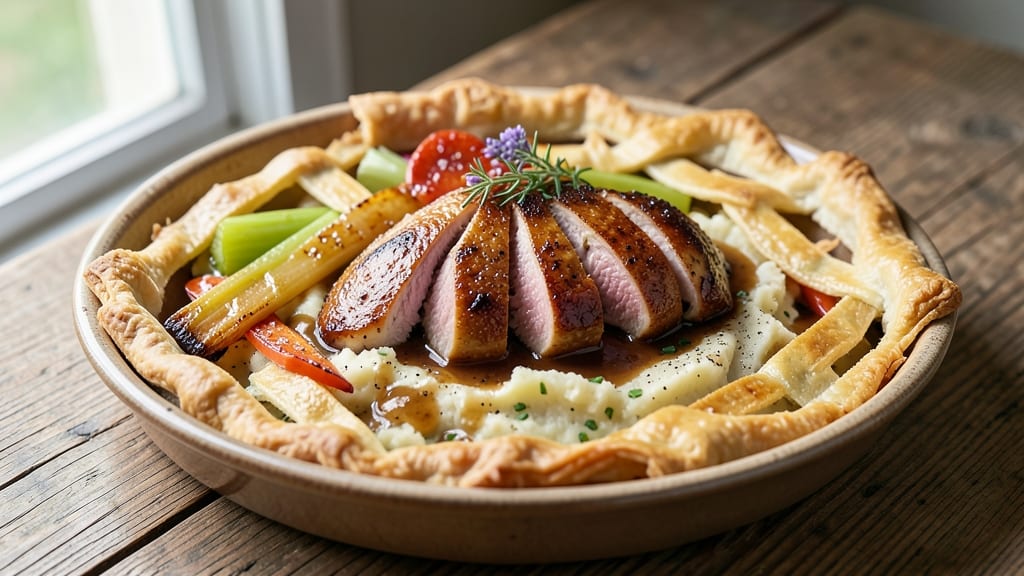
Transforming wild game into a showstopping centerpiece, this pheasant pot pie combines tender pheasant with a luscious herbed cream sauce and flaky pastry crust. The rich, savory filling transforms lean pheasant into a moist, flavorful centerpiece that pairs beautifully with seasonal vegetables.
I developed this recipe after years of perfecting the balance between traditional techniques and modern adaptations—like a velvety cream sauce that elevates the earthy flavors of the game.
The key to success lies in properly browning the pheasant first—this creates deep, caramelized flavors that form the foundation of the dish. A layer of tender carrots, celery, and potatoes provides heartiness, while the herbed cream sauce ties everything together with aromatic thyme and parsley.
The flaky pastry crust seals in all the juices, ensuring every bite is packed with rich, savory goodness.
What you'll end up with is a pot pie that looks impressive enough for a holiday table but is simple enough for a weeknight dinner. The pheasant stays moist and flavorful, the vegetables are perfectly tender, and the cream sauce is rich yet balanced—never overpowering.
This recipe delivers restaurant-quality results without requiring advanced techniques, making it perfect for both experienced cooks and those looking to impress.
Serve this pot pie with a crisp green salad or steamed vegetables to round out the meal. The leftovers reheat beautifully, so it's ideal for meal prep or feeding a crowd. Let's get started on creating this elevated wild game dish that's sure to become a family favorite.
Ingredients for pheasant pot pie
Elevate wild game with these quality ingredients for a restaurant-worthy pheasant pot pie.
| Ingredient | Amount | Notes |
|---|---|---|
| Fresh Pheasant 🦅 | 1 ½ lb | Skin-on, cut into serving pieces |
| All-Purpose Flour 🌾 | ½ cup | For dredging pheasant pieces |
| Unsalted Butter 🧈 | ¾ cup | Cold, cut into pieces |
| Yellow Onion 🧅 | 1 whole | Diced, medium size |
| Celery Stalks 🥬 | 3 whole | Diced, medium size |
| Carrots 🥕 | 4 medium | Peeled, sliced into rounds |
| Russet Potatoes 🥔 | 2 medium | Peeled, sliced into rounds |
| Fresh Thyme 🌿 | 1 tbsp | Leaves only, chopped |
| Fresh Parsley 🌿 | ¼ cup | Chopped, flat-leaf preferred |
| Heavy Cream 🥛 | 1 cup | Full-fat for richness |
| Chicken Stock 💧 | 1 ½ cups | Homemade or quality store-bought |
| Unsalted Butter 🧈 | 2 tbsp | For sauce finishing |
| All-Purpose Flour 🌾 | 1 tbsp | For thickening sauce |
| Salt 🧂 | 1 ½ tsp | Kosher or sea salt |
| Black Pepper 🌶️ | ½ tsp | Freshly ground preferred |
| Store-Bought Pie Crust 🍰 | 1 sheet | Or homemade equivalent |
| Large Egg 🥚 | 1 whole | For egg wash |
The pheasant is the star, so source it fresh from a reputable game dealer or specialty butcher. Look for birds that are plump with bright, unbroken skin—this indicates freshness. If you're using frozen, thaw it overnight in the fridge, never under running water. For the vegetables, organic carrots and celery from Whole Foods or your local farmers market add subtle sweetness. Potatoes should be waxy varieties like Yukon Gold—they hold their shape better than russets in this dish. The thyme and parsley matter too; fresh herbs from a trusted grocer like Trader Joe's ensure vibrant flavor that dried can't match.
No fresh pheasant? Duck or quail work as substitutes, though the flavor profile shifts slightly. Short on thyme? Dried thyme at one-third the amount suffices, but fresh is ideal. The chicken stock can be swapped for vegetable stock for a vegetarian version, though the depth of flavor will differ. For the pie crust, homemade is superior—store-bought works in a pinch but lacks that flaky perfection. The heavy cream must be full-fat; light or reduced-fat versions won't deliver the same luxurious texture. If you're concerned about calories, use half-and-half instead, though the sauce will be slightly lighter.
This pot pie reheats beautifully—450°F for 20-25 minutes until the crust is golden. Store leftovers in an airtight container for up to 3 days in the fridge, or freeze for 3 months for later meals. For meal prep, assemble the pie without baking, wrap tightly, and freeze. Bake straight from frozen, adding 10-15 minutes to the cooking time. The crust browns faster when reheating, so watch closely. Portion into individual servings before freezing for easy reheating.
Why You'll Love This Recipe
- One-Pan Wonder: I swear by this recipe when I don’t want to dirty a million dishes. The pheasant browns right in the same pot where the veggies soften—no extra pans, no stress. Just butter, onions, celery, and a little flour to thicken the sauce while it simmers.
- Rich, Earthy Depth: That first bite of tender pheasant with the golden crust? It’s like a hug in food form. The butter and onions caramelize into something almost sweet, while the flour crust adds just enough crispness to balance the gamey richness.
- Weeknight Magic: Between us, this is my secret for when friends drop by unannounced. It feeds four easily, but I’ve stretched it to six with extra veggies—no one ever complains. Plus, it’s fancy enough for company but simple enough to make when you’re exhausted.
- Leftovers That Win: Honestly, I make this on Sundays just so I have something amazing for lunch all week. The filling stays creamy, the crust stays tender, and honestly? The second day is even better. (Yes, even on a Tuesday night.)
Step-by-step instructions for pheasant pot pie recipe
Transform wild game into a comforting classic with this method—rich filling and flaky crust guaranteed.
Sear the Pheasant for Maximum Flavor
Pat the 1.5 lb fresh pheasant pieces dry with paper towels and season both sides generously with 1 tsp salt and 0.25 tsp black pepper. In a large skillet over medium-high heat, melt 0.5 tbsp unsalted butter and sear the pheasant for 3-4 minutes per side until golden brown. This step creates deep flavor through the Maillard reaction—don't rush it.
Remove the pheasant and set aside. In the same skillet, add 0.25 cup unsalted butter and let it melt completely. Add the 1 whole yellow onion and 3 whole celery stalks, cooking for 5 minutes until softened. Stir in 4 medium carrots and 2 medium russet potatoes, sliced into rounds, cooking for another 3 minutes to lightly blanch them. This pre-cooking prevents a watery filling later.
Build the Herbed Cream Filling
Return the seared pheasant to the skillet and pour in 1.5 cups chicken stock. Bring to a gentle simmer, cover, and cook for 15 minutes until the vegetables are tender and the liquid has reduced by half. Remove from heat and stir in 1 cup heavy cream, 1 tbsp chopped fresh thyme, and 0.25 cup chopped fresh parsley. Season with remaining 0.5 tsp salt and 0.25 tsp black pepper. The filling should be thick but still spoonable—if too thin, simmer uncovered for 2-3 minutes to reduce further.
Transfer the filling to a greased 9-inch pie dish and smooth the top. Here's the thing—this is where the magic happens. The pheasant pieces should be partially submerged, allowing them to finish cooking while staying moist. If the filling looks too thick, whisk together 1 tbsp all-purpose flour with 1 tbsp cold water and stir it in to create a velvety texture.
Prepare and Assemble the Crust
Roll out the 1 sheet store-bought pie crust on a lightly floured surface to fit the pie dish. Brush the crust with the 1 whole large egg beaten with 1 tbsp water, then sprinkle with additional 0.25 tsp black pepper for extra flavor. Fold the edges of the crust over the filling, creating a sealed edge. Cut a few small slits in the center to allow steam to escape—this prevents a soggy bottom.
For a golden finish, brush the crust with an additional 1 tbsp egg wash and sprinkle with 0.25 tsp salt. Here's the critical part: place a baking sheet on the lower rack of your oven before preheating to 375°F. This creates steam that crisps the bottom while the top browns beautifully. Bake for 45-50 minutes until the crust is golden brown and the filling is bubbling through the slits.
Rest and Serve for Perfect Texture
Remove the pot pie from the oven and let it rest for 15-20 minutes before slicing. This resting period allows the filling to set slightly, making it easier to serve without spillage. The crust should be crisp and golden, while the filling remains creamy and flavorful. If the crust puffs up during baking, gently press it down with a spoon while warm—it'll still look beautiful but be easier to serve.
Slice into wedges and serve immediately. Each bite should deliver tender pheasant, rich herbed cream sauce, and a flaky crust that contrasts perfectly with the hearty filling. The combination of wild game and comforting pie crust makes this dish ideal for special occasions or cozy weeknight dinners.
Pro Tips For Making Pheasant Pot Pie
- Brown the Pheasant First: Skip the raw meat in the pot—sear the pheasant in batches over medium-high heat until deeply golden. I learned this the hard way: skipping this step leaves the meat pale and dry, no matter how long you simmer later. Use a splash of white wine or water to deglaze the pan afterward; that browned crust is where all the flavor hides.
- Dice Celery Small: Cut the celery into ¼-inch pieces, not the usual ½-inch chunks. Smaller bits soften faster and blend into the filling instead of sitting as chewy afterthoughts. Pro tip: Pulse in a food processor for consistency—just don’t overdo it or you’ll end up with mush.
- Don’t Overmix the Dough: Handle the flour-butter dough like it’s a nervous cat—just enough to bring it together, then stop. Overworking it makes the crust tough, and nobody wants a pot pie crust that fights back. Press it into the dish, trim the edges, and let it rest 15 minutes before baking. (Yes, even if you’re impatient like me.)
- Vent That Crust: Cut a 2-inch slit in the center of the dough before baking—no fancy lattice needed. Pheasant pot pie is rich, and without a vent, steam gets trapped, turning your golden top into a soggy mess. Trust me, a small cut keeps the filling juicy without sacrificing the crust’s integrity.
Dietary considerations for pheasant pot pie
Game Bird Allergies
If you or your guests have pheasant allergies, this recipe can be adapted using duck or quail as substitutes—they share similar cooking techniques and flavor profiles.
For severe allergies, opt for a chicken or turkey pot pie instead, adjusting the cooking time to ensure the meat reaches 165°F internal temperature. Always confirm substitutions with an allergist if needed. 🦆
Gluten-Free Adaptation
The filling itself is naturally gluten-free, but the store-bought pie crust often contains wheat. Swap it for a gluten-free crust like the one from Pillsbury or a homemade version using almond flour and xanthan gum.
For the sauce, ensure your chicken stock is certified gluten-free—brands like Pacific Foods offer safe options. The filling remains rich and creamy without gluten. 🌾
Dairy-Free Options
The herbed cream sauce is the heart of this dish, but it can be easily modified for dairy-free diets. Replace the heavy cream with full-fat coconut milk or a dairy-free cream substitute like Oatley Creamer.
For the crust, use a dairy-free pie crust (check labels for butter substitutes) or make your own with vegetable shortening. The flavor stays rich, though the texture may be slightly lighter. 🥥
Low-Carb Modifications
To reduce carbs, replace the potatoes with cauliflower florets or zucchini slices, both of which hold up well in the filling. For the crust, use a low-carb pie crust made with almond flour or a cauliflower crust mix.
The pheasant remains the star, and the herbed sauce adds depth without heavy carbs. This version keeps the dish satisfying while cutting net carbs significantly. 🥦
Vegetarian Substitutions
For a vegetarian pot pie, replace the pheasant with mushrooms (like cremini or shiitake) or hearts of palm for a meaty texture. Use vegetable stock instead of chicken stock and add lentils or chickpeas for protein.
The herbed cream sauce remains the same, and the crust stays flaky. This version keeps the comfort of the original while being fully plant-based. 🌱
Nutrition facts
Frequently asked questions
Can I use frozen pheasant instead of fresh?
Yes, but thaw it properly first. Place the frozen pheasant in the refrigerator for 24 hours to thaw slowly—never at room temperature. This maintains texture and prevents uneven cooking. Pat the pieces completely dry before searing to ensure a crispy crust.
How do I prevent the crust from getting soggy?
Prevent sogginess by creating a steam barrier. Place a baking sheet on the lower oven rack before preheating to 375°F. This creates steam that crisps the crust bottom while it bakes. Also, cut small slits in the crust before baking to let steam escape—this keeps the filling moist without weakening the crust.
What's the best way to reheat leftovers?
Reheat individual slices in a 350°F oven for 15-20 minutes until warmed through. For microwave reheating, cover with a damp paper towel and heat in 30-second intervals to avoid drying out the filling. The crust may lose crispiness, so reheating in the oven is ideal for maintaining texture.
Can I make this pot pie ahead of time?
Assemble the pie without baking, wrap tightly in plastic, and refrigerate for up to 24 hours or freeze for 3 months. Bake straight from frozen, adding 10-15 extra minutes to the cooking time. The crust may need an additional 5 minutes under the broiler to crisp up after thawing.
What's the secret to tender pheasant?
The secret lies in proper browning and moist cooking. Sear the pheasant until golden brown before adding liquids to lock in flavors. Then, cook it gently in the filling with just enough liquid to keep it moist—15 minutes covered simmering is ideal. Avoid overcooking, or the meat will become dry.