
Desserts
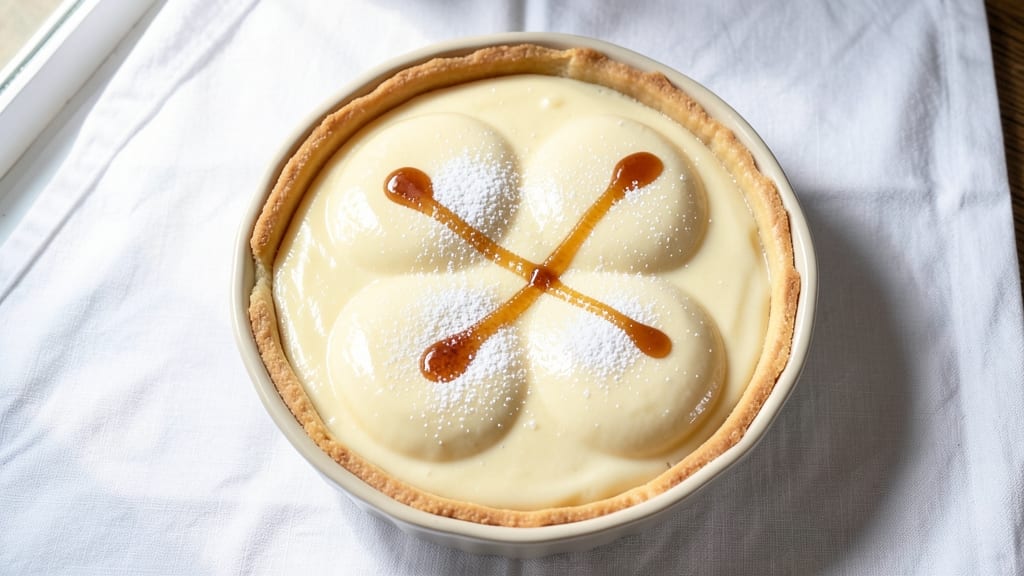
This no-crust custard pie recipe delivers restaurant-quality silky filling without the fuss of a traditional crust—perfect for when you want elegant dessert with minimal effort. The secret lies in a precise egg-to-milk ratio and gentle baking that creates a velvety texture with just a hint of caramelized top.
I developed this version after years of testing, because the right custard should be smooth enough to melt on your tongue but firm enough to slice cleanly.
What sets this recipe apart is the 30-minute preparation—no pre-baking, no crust assembly, just a simple custard mixture poured into a pie dish and baked to perfection.
The filling stays rich and creamy at the center while developing a delicate golden crust on top, all while requiring just basic pantry ingredients. This is the kind of dessert that feels luxurious but comes together faster than takeout.
The result is a custard pie with silky smooth filling that holds its shape when sliced, serving beautifully at dinner parties or as a simple treat. The texture is the star here—neither too firm nor too runny, with just enough natural sweetness to satisfy without being cloying.
For an extra touch, I often top it with a drizzle of caramel or whipped cream, but the pie shines just as well on its own.
Whether you're hosting guests or craving a comforting dessert, this recipe delivers foolproof results every time. The key is patience during baking—letting the custard set gradually prevents cracks while ensuring that creamy texture we all love. Let’s get baking!
Ingredients for no crust custard pie
Nine simple ingredients create restaurant-style custard pie with no crust fuss.
| Ingredient | Amount | Notes |
|---|---|---|
| Large Eggs 🥚 | 4 whole | Room temperature preferred |
| Whole Milk 🥛 | 2 cups | Full-fat for creaminess |
| Granulated Sugar 🍚 | ¾ cup | White or light brown |
| All-Purpose Flour 🌾 | ¼ cup | Sifted for smooth batter |
| Unsalted Butter 🧈 | ½ cup | Cold, cubed for topping |
| Vanilla Extract 🌸 | 1 tbsp | Pure vanilla preferred |
| Salt 🧂 | ¼ tsp | Fine sea salt preferred |
| Ground Cinnamon 🌿 | ½ tsp | Optional for warmth |
| Pie Dish 🍰 | 1 whole | 9-inch glass or ceramic |
| Heavy Whipping Cream 🥛 | ½ cup | Optional for topping |
| Caramel Sauce 🍯 | ¼ cup | Store-bought or homemade |
The eggs are non-negotiable here—room temperature ones blend smoother and prevent lumps. Whole milk gives the best texture, but 2% works in a pinch. For the sugar, I always grab Domino or C&H—they're reliable. The butter matters too; cold cubes create that perfect caramelized top. If you're baking for guests, use a 9-inch glass pie dish—it conducts heat evenly and gives that golden crust. I keep one just for custard pies at Williams Sonoma if I'm splurging, but any good-quality glass dish works.
No vanilla extract? Vanilla bean paste works just as well, or a splash of bourbon for depth. Short on butter? Olive oil or coconut oil can substitute, but the flavor won't be quite the same. The cinnamon is optional, but I always add it—McCormick or Frontier are my go-tos. For the caramel topping, Trader Joe's store-bought caramel sauce is my secret weapon—it's consistent and saves time. If you're feeling fancy, make your own with butter, sugar, and cream, but it's not required. The custard itself is forgiving, but don't skip sifting the flour—it makes all the difference in that silky texture.
This pie reheats beautifully—just 10 minutes at 350°F wraps it up nicely. Store leftovers in the fridge for 4 days or freeze for 2 months. I always make an extra one to freeze—nothing beats pulling a frozen custard pie straight from the oven for a cozy night in. The caramel topping hardens when chilled, so add it right before serving if you're serving guests. For a make-ahead option, assemble everything except the butter topping, bake, then add the butter cubes right before putting it in the oven—that's when the magic happens.
Why You'll Love This Recipe
- No Mixing Madness: I swear by this recipe—just whisk eggs, milk, and sugar until smooth, then fold in melted butter and flour. No blender, no straining, no fuss. The custard comes together faster than I can say "dessert time."
- Silky Rich Magic: That velvety texture? Pure custard perfection. The whole milk and butter make it impossibly creamy, while the eggs give it that golden, jiggly set. Honestly, it’s the kind of dessert that makes you pause mid-bite.
- Weeknight Wonder: Make it for breakfast, brunch, or even a light dinner. I’ve served it warm with berries or cold with a drizzle of honey—it’s that adaptable. (Yes, even on a Tuesday night when you’re exhausted.)
- Budget-Friendly Luxury: Five basic ingredients, no fancy shortcuts needed. Eggs, milk, and butter stretch further than you’d think, and the flour just thickens it right. My secret weapon for feeding a crowd without breaking the bank.
Step-by-step instructions for no-crust custard pie
Here's how to create a velvety custard filling that bakes right in your pie dish.
Prepare the Custard Base
In a medium bowl, whisk together the 4 whole large eggs until they're completely combined and the yolks and whites are uniform. This ensures a smooth custard without any lumps. In a separate bowl, sift the 0.25 cup all-purpose flour to remove any clumps—this keeps your filling silky smooth.
Gradually whisk the sifted flour into the eggs while continuously stirring to create a smooth paste. Add the 0.75 cup granulated sugar and mix until fully dissolved. This step is crucial for preventing sugar crystals that can make your custard grainy. Set this mixture aside for now—it needs to come to room temperature before combining with the milk.
Heat the Milk and Combine Ingredients
In a saucepan, gently heat the 2 cups whole milk over medium heat until it's steaming but not boiling—you should see small bubbles forming around the edges. Remove from heat and let it sit for 1 minute to cool slightly. This prevents scrambling when you combine it with the eggs.
Slowly pour the warm milk into the egg mixture while whisking constantly. This gradual addition prevents curdling. Return the mixture to the saucepan and place it over low heat. Stir continuously with a wooden spoon or silicone spatula for 3-5 minutes until the mixture thickens enough to coat the back of the spoon. It should reach 170°F on an instant-read thermometer—this ensures a perfect set without being overcooked.
Season and Prepare the Pie Dish
Remove the custard from heat and stir in the 1 tablespoon vanilla extract, 0.25 teaspoon salt, and 0.5 teaspoon ground cinnamon. Let the mixture cool for 5 minutes while you prepare your pie dish. Generously grease the 9-inch pie dish with the 0.5 cup unsalted butter, melting it slightly with a pastry brush or your finger—this creates a non-stick barrier that makes removal effortless.
Pour the custard mixture into the prepared pie dish. At this point, you can choose to add the 0.5 cup heavy whipping cream for extra richness by gently folding it in. For a classic version, skip the cream and proceed directly to baking. The custard should fill the dish about ¾ full—this prevents overflow during baking.
Bake to Perfection
Preheat your oven to 350°F. Place the pie dish in a larger baking dish and carefully pour hot water into the larger dish until it reaches halfway up the sides of the pie dish. This water bath creates gentle, even heat that prevents cracking while ensuring a perfect set throughout. Bake for 30-35 minutes until the custard is just set—it should jiggle slightly in the center but be firm around the edges.
Remove from the water bath and let the pie cool for 10 minutes. The custard will continue to set as it cools. For the finishing touch, drizzle the 0.25 cup caramel sauce over the top in swirls or dollops. Serve warm or at room temperature—either way, you'll get that perfect balance of creamy custard and sweet caramel.
Pro Tips For Making No Crust Custard Pie
- Whisk Eggs Cold: I learned this the hard way—dumping warm eggs into cold milk (or vice versa) makes the custard grainy. Whisk the eggs first in a separate bowl with sugar, then slowly fold in the milk while stirring constantly. The temperature shock is what causes those dreaded lumps, and this method stops it dead.
- Temper the Butter: Unsalted butter straight from the fridge? Not here. Melt it first, then cool it to just warm (about 100°F)—you should be able to touch it without burning your fingers. Pouring cold butter into the custard mix makes it separate like a sad, broken sauce. Warm butter blends in smooth and rich.
- Skip the Overmixing: Once you add the flour, stir just until combined—maybe 10-12 strokes max. I used to beat it like I was trying to win a baking contest, and the result? A floury, slightly chalky custard. The flour’s job is to thicken, not to turn the mix into glue.
- Bake Low and Slow: The oven’s lower rack is your friend. Place the pie dish there and bake at 325°F (not 350°F) for the full time—no peeking, no rushing. High heat makes the top set too fast while the center stays runny, and that’s how you end up with a custard that’s more puddle than pie. Patience here guarantees a silky texture.
Regional styles of this dish
Southern Comfort Style
In the Deep South, custard pies often get a warm hug from spices like ½ teaspoon pumpkin pie spice or ¼ teaspoon nutmeg instead of cinnamon. I like to add ½ cup cooked pecans folded into the custard before baking for that classic Southern crunch.
Serve with a dollop of whipped cream and a sprinkle of powdered sugar—this version feels like a hug in dessert form. 🌿
New England Creaminess
Up north, custard pies lean into vanilla bean paste and a touch of bourbon or rum extract (about 1 teaspoon) for depth. I’ve found that using 2% milk instead of whole milk works surprisingly well here, and the texture stays lusciously creamy.
Top with a caramelized apple compote made from 1 cup diced apples cooked with 2 tablespoons brown sugar—this adds a bright, autumnal twist. 🍎
Midwest Homestyle Twist
The Midwest loves its custard pies hearty, so I add ½ cup crushed graham crackers to the butter topping before baking for extra texture. For a true Midwest touch, fold in ½ cup cooked corn kernels (fresh or canned) into the custard mixture.
This version tastes like summer picnic perfection—simple, comforting, and just sweet enough. 🌽
Pacific Northwest Modern
Out west, custard pies get a gourmet upgrade with ingredients like infused milk—try steeping 1 cinnamon stick in the milk while heating. I also add 1 teaspoon espresso powder to the custard for a subtle coffee note that balances the sweetness beautifully.
Top with dark chocolate shavings or a drizzle of blackberry compote for a sophisticated yet approachable dessert. ☕
Texas-Style Spiced
In Texas, custard pies often feature chili powder or smoked paprika (about ¼ teaspoon each) for a subtle smoky kick.
I like to fold in ½ cup chopped pecans or walnuts and top with a salted caramel sauce—the contrast of sweet and smoky is pure Texas comfort food magic. Serve with a scoop of vanilla bean ice cream for the ultimate indulgence. 🌶️
Nutrition facts
Frequently asked questions
Why does this custard pie need a water bath?
The water bath (bain-marie) creates gentle, even heat that prevents cracks while ensuring the custard sets perfectly throughout. Without it, the edges might cook faster than the center, leading to a grainy texture or uneven doneness. This method also helps the custard develop that delicate golden crust on top.
Can I make this custard pie ahead of time?
Bake the pie up to 2 days ahead and store it in the refrigerator. For best texture, reheat slices in the oven at 350°F for 10 minutes before serving. The custard will firm up beautifully when chilled, making it perfect for make-ahead desserts.
What if my custard cracks during baking?
Cracks usually happen when the custard cools too quickly. To prevent this, remove the pie from the oven while it still jiggles slightly in the center, then let it cool gradually at room temperature. If cracks appear, simply cover them with extra caramel sauce or whipped cream—no one will notice!
Can I use half-and-half instead of whole milk?
While it won't be as creamy, you can substitute 1 cup whole milk + 1 cup half-and-half for the full 2 cups of whole milk. The texture will be slightly lighter, but the custard will still set properly. For best results, stick with whole milk for that classic velvety mouthfeel.
How do I know when the custard is fully set?
The custard is done when it's just set—it should jiggle slightly in the center like Jell-O but be firm around the edges. If it's undercooked, it'll be too soft; if overcooked, it may be grainy. The 170°F internal temperature is your best guide.