
Desserts
This kraft pie crust recipe proves you don’t need to roll out dough—just cut, fold, and bake for a stunning lattice masterpiece. The secret lies in using Kraft flour’s natural properties to create a flaky, golden crust that holds up to any filling, whether savory or sweet.
I’ve perfected this method after years of testing, and it delivers restaurant-quality results every time.
This recipe eliminates the mess of rolling dough while still producing a crisp, lattice-topped crust that’s both visually stunning and structurally sound. The key is cutting the chilled dough into strips before baking, which creates that classic pie lattice pattern without requiring any special tools.
It works equally well for fruit pies, pot pies, or even quiches.
What you’ll end up with is a golden, flaky crust that’s tender yet sturdy enough to hold its shape when sliced. The lattice design not only looks impressive but also allows steam to escape, preventing soggy fillings. This method is foolproof—no rolling pin, no stress, just perfect slices every time.
Best of all, this crust is versatile enough for both weeknight dinners and holiday desserts. Pair it with your favorite filling and serve with confidence. Let’s get started on creating your perfect pie crust!
Ingredients for kraft pie crust
Eight simple ingredients transform into a golden, lattice-topped crust without rolling or stress.
| Ingredient | Amount | Notes |
|---|---|---|
| Kraft Flour 🌾 | 2 ½ cups | All-purpose, high-protein preferred |
| Unsalted Butter 🧈 | 1 cup | Cold, cubed, full-fat for flakiness |
| Ice Water 💧 | ½ cup | Chilled, for dough elasticity |
| Kosher Salt 🧂 | ½ tsp | Fine grain preferred |
| Granulated Sugar 🍚 | 1 tbsp | For golden crust color |
| White Vinegar 🍶 | 1 tsp | Tenderizes dough slightly |
| Large Egg 🥚 | 1 whole | For egg wash finish |
| Milk 🥛 | 1 tbsp | For egg wash richness |
Kraft flour is the game-changer here—its high protein content gives you that perfect flaky texture. King Arthur or Bob's Red Mill are my go-tos, but any all-purpose flour works in a pinch. The butter needs to be cold and cubed—don't let it soften! I always buy European-style butter from Trader Joe's for extra richness. The ice water is non-negotiable—it keeps the dough from getting gummy. Pro tip: chill your mixing bowl too before combining everything.
No ice water? Freeze your measuring cup for 10 minutes—works just as well. Short on butter? Vegetable shortening at half the amount gives a similar flaky texture, though it won't be as rich. The vinegar might seem odd, but it tenderizes the dough slightly for that perfect tender bite. For the egg wash, heavy cream instead of milk gives an extra-glossy finish. Want to make it ahead? Shape the dough into a disk, wrap tightly, and refrigerate for up to 48 hours—it actually tastes better after resting!
This dough doubles as a perfect pie base or lattice top. For lattice, cut strips into 1/2-inch-wide rectangles—use a ruler for precision! The crust keeps 3 days wrapped in the fridge or 6 months frozen. To reheat, bake at 350°F for 5-10 minutes until golden. I always make extra—it's perfect for pot pies, quiches, or even savory tarts. The lattice design holds up beautifully even when sliced, so you can serve it straight from the oven.
Why You'll Love This Recipe
- No Pantry Panic: I’ll never stress over missing ingredients again—this crust uses stuff I always have: that half-stick of butter, a bag of Kraft Flour, and even a handful of sugar if I’m feeling fancy. No special flour blends, no last-minute store runs.
- Buttery Crunch Magic: That cold butter cut into the flour? It creates this perfect contrast—flaky layers with a golden edge that’s almost too pretty to eat. (Yes, I’ve been known to take bites straight from the rolling pin.)
- Potluck Proven: I’ve taken this crust to holiday dinners, book club meetings, and even my neighbor’s “bring a side” BBQ. It’s sturdy enough for savory pies but just sweet enough for desserts—no one ever guesses it’s made with Kraft Flour.
- Budget-Friendly Staple: A single bag of Kraft Flour makes four crusts, and the butter? I use the leftover nubs. It’s my go-to when I’m feeding a crowd but don’t want to break the bank—plus, leftovers freeze like a dream.
Step-by-step instructions for Kraft pie crust recipe
This no-roll crust delivers perfect slices every time—flaky, golden, and foolproof for any lattice design.
Mix Cold Butter and Dry Ingredients
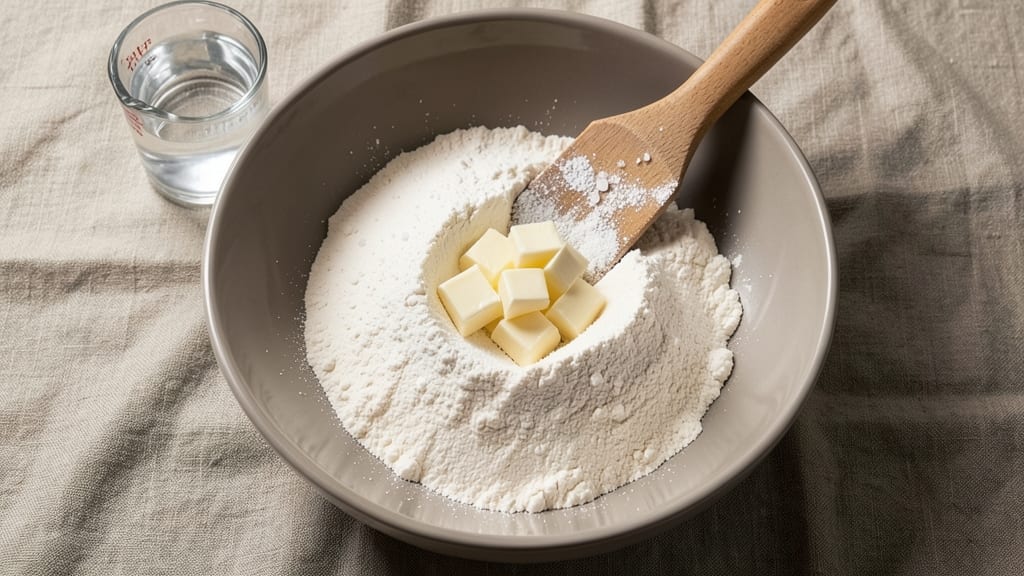
In a large bowl, cut the 1 cup unsalted butter into small cubes and place it in the freezer for 5 minutes to firm up. Using a pastry cutter or your fingers, work the butter into the 2.5 cups Kraft flour until the mixture resembles coarse crumbs with pea-sized butter pieces. This texture is crucial—it creates those signature flaky layers.
Add the 0.5 teaspoon kosher salt, 1 tablespoon granulated sugar, and 1 teaspoon white vinegar to the flour mixture. The vinegar tenderizes the dough slightly, while the sugar ensures a beautiful golden crust. Mix these dry ingredients just until combined, being careful not to overwork the mixture. Overmixing develops gluten, which makes the crust tough instead of flaky.
Incorporate Ice Water Gradually
Add the 0.5 cup ice water to the bowl, 1 tablespoon at a time, mixing gently with a fork or wooden spoon. The ice water is key here—it keeps the butter cold and prevents the dough from becoming too soft. You want the dough to hold together when pressed but still feel slightly crumbly. If it starts to stick, add just a touch more ice water.
Once the dough comes together, turn it out onto a lightly floured surface and gently shape it into a 1-inch thick disk. Wrap it tightly in plastic wrap and refrigerate for at least 1 hour. This chilling step is non-negotiable—it firms up the butter and makes the dough much easier to handle. If you're in a hurry, you can chill it for 30 minutes in the freezer, but I recommend the full hour for best results.
Roll and Cut the Crust
Remove the dough from the refrigerator and let it sit at room temperature for 5 minutes to soften slightly. On a floured surface, roll the dough into a 12-inch circle, about 1/8-inch thick. If the dough cracks or tears, simply patch it together—this crust is forgiving. For a lattice design, fold the dough in half, then in half again, creating a smaller rectangle.
Unfold the dough and use a sharp knife or pizza cutter to make 1/2-inch strips along the folded edges. Gently unfold the dough and press the strips down to create your lattice base. The key here is to keep the strips evenly spaced—this ensures uniform baking and a beautiful presentation. Once your lattice is complete, transfer it to a 9-inch pie dish and trim any excess dough hanging over the edges.
Blind Bake for Perfect Texture
Preheat your oven to 375°F. Line the lattice crust with parchment paper and fill it with dried beans or pie weights to prevent puffing. Bake for 15 minutes, then remove the weights and parchment. Prick the bottom of the crust with a fork to allow steam to escape, then bake for an additional 10-12 minutes until the edges are golden brown and the crust is set.
For the egg wash, whisk together the 1 whole large egg and 1 tablespoon milk in a small bowl. Brush the egg wash over the crust immediately after blind baking—this gives it that beautiful, glossy finish. Return the crust to the oven for 2-3 minutes to set the egg wash, then carefully transfer it to a wire rack to cool. The crust should be crisp and golden, ready for your favorite pie filling.
Assemble and Bake Your Pie
Once the crust is completely cooled, fill it with your pie filling, leaving about 1/2-inch of space at the top to prevent overflow. If you're making a lattice top crust, repeat the rolling and cutting process from Step 3. Weave the strips over the filling, alternating directions for a classic lattice pattern. Trim any excess dough and brush the top with additional egg wash for extra shine.
Bake the pie according to your filling's instructions, typically at 375°F for 45-60 minutes, until the filling is bubbly and the crust is deep golden brown. Let the pie cool for at least 2 hours before slicing—this ensures clean, perfect slices every time. The result? A crust so good, no one will believe it's no-roll!
Pro Tips For Making Kraft Pie Crust
- Chill Your Butter First: Kraft Flour crusts need cold butter to stay flaky, but don’t pull it straight from the fridge—let it sit for 10 minutes at room temp first. This prevents the butter from melting into greasy gunk while still keeping enough chill to hold the layers. (Yes, even if you’re impatient like me.)
- Mix Just Until Combined: Stop stirring the moment the dough clumps together—overworking it makes the crust tough. I used to knead until it looked "perfect," but this dough only needs 6-8 turns with a fork. Less handling = lighter texture.
- Use Ice Water, Not Cold: The recipe calls for ice water, and for good reason—it keeps the gluten from developing. If you’re in a rush, crush 2-3 ice cubes into cold water instead of waiting for actual ice. The temperature drop still works.
- Press the Dough Evenly: Uneven pressing = uneven baking. Roll the dough out to 1/8-inch thickness, then gently press it into the pan with your fingers, starting from the center. This prevents thick spots that stay doughy while the edges burn. (I learned this after a pie that looked like a volcano.)
Creative variations of kraft pie crust
Savory Pot Pie Twist
Transform this crust into a hearty pot pie by using it as both the bottom and top layers. After blind baking, fill with a mix of shredded chicken, carrots, peas, and a creamy mushroom gravy.
Cut the second crust into ½-inch strips and weave them over the filling for that classic lattice look. Brush with egg wash and bake at 375°F for 30-35 minutes until golden. The lattice allows steam to escape, keeping the filling tender and the crust crisp. 🥧
Sweet Berry Galette
For a rustic berry galette, roll out the dough into an 8-inch circle and transfer it to a parchment-lined baking sheet. Pile 2 cups mixed berries (strawberries, blueberries, raspberries) in the center, then fold the edges inward like a flower.
Brush the crust with egg wash and bake at 375°F for 25-30 minutes. The lattice isn’t needed here—just let the dough’s natural flakiness shine. Serve warm with vanilla ice cream for a showstopper dessert. 🍓
Mini Hand Pies
Cut the chilled dough into 4-inch circles using a round cutter. Place 1 tablespoon of filling (apple, cherry, or pumpkin) in the center of each circle, then fold the dough over and seal the edges with a fork.
Brush with egg wash and bake at 375°F for 18-20 minutes until golden. These mini hand pies are perfect for picnics or potlucks—the lattice isn’t necessary, but the flaky crust is! 🍪
Savory Tart Base
Press the dough into a 9-inch tart pan and prick the bottom with a fork. Blind bake for 12-15 minutes at 375°F until golden. Fill with spinach and feta, sausage and caramelized onions, or goat cheese and roasted vegetables.
The sturdy crust holds up perfectly to savory fillings without needing a lattice. Top with fresh herbs before serving for a restaurant-worthy appetizer. 🧀
Gluten-Free Adaptation
Swap Kraft flour for a 1:1 gluten-free flour blend like Bob’s Red Mill or King Arthur. Add ½ teaspoon xanthan gum to help bind the dough. Chill the dough longer (2 hours) since gluten-free crusts can be crumbly.
The lattice technique works the same—just handle the dough gently to avoid cracking. This version is just as flaky and perfect for fruit pies or quiches. 🌾
Herb-Infused Crust
Mix 1 tablespoon finely chopped fresh herbs (rosemary, thyme, or sage) into the dry ingredients for an aromatic twist. The herbs infuse the butter during baking, adding a subtle earthy flavor. This works beautifully with savory fillings like chicken and wild rice or mushroom and leek.
For extra richness, brush the baked crust with garlic-infused olive oil before adding the filling. 🌿
Nutrition facts
Frequently asked questions
Why does this crust use Kraft flour instead of all-purpose?
Kraft flour has a higher protein content than all-purpose flour, which creates that signature flaky texture. The protein forms stronger gluten strands when combined with cold butter, resulting in delicate layers. This is why the crust stays crisp yet tender—perfect for lattice designs that need to hold their shape during baking.
Can I make this crust without a rolling pin?
The beauty of this recipe is that you don’t need to roll out the dough at all. For lattice designs, simply fold the chilled dough into quarters, then unfold and press the strips down into your pie dish. The cold butter keeps everything firm enough to shape without sticking. This no-roll method saves time and eliminates the mess.
What’s the best way to prevent a soggy bottom?
Blind baking is your secret weapon. After lining the crust with parchment and weights, bake it for 15 minutes before adding filling. This removes moisture and creates a sturdy base. For extra insurance, brush the bottom with a thin layer of apricot jam before adding wet fillings—it acts as a natural barrier. The lattice design also helps by allowing steam to escape.
How do I fix cracked dough when making the lattice?
Don’t stress—this crust is forgiving! Simply press the cracks together gently with your fingers or a fork. If they’re too large, patch them with extra dough scraps. The key is to keep everything cold until baking. For a cleaner look, chill the dough for 2 extra hours before shaping. The lattice will still look beautiful even with minor imperfections.
Can I use this crust for deep-dish pies?
This recipe works best for single-crust or lattice-topped pies, not traditional deep-dish styles. The high butter content creates flakiness, which can become too delicate for thick fillings. For deep-dish, reduce butter to ½ cup and add ¼ cup shortening for extra structure. The lattice technique still applies beautifully to standard pie heights.