
Desserts
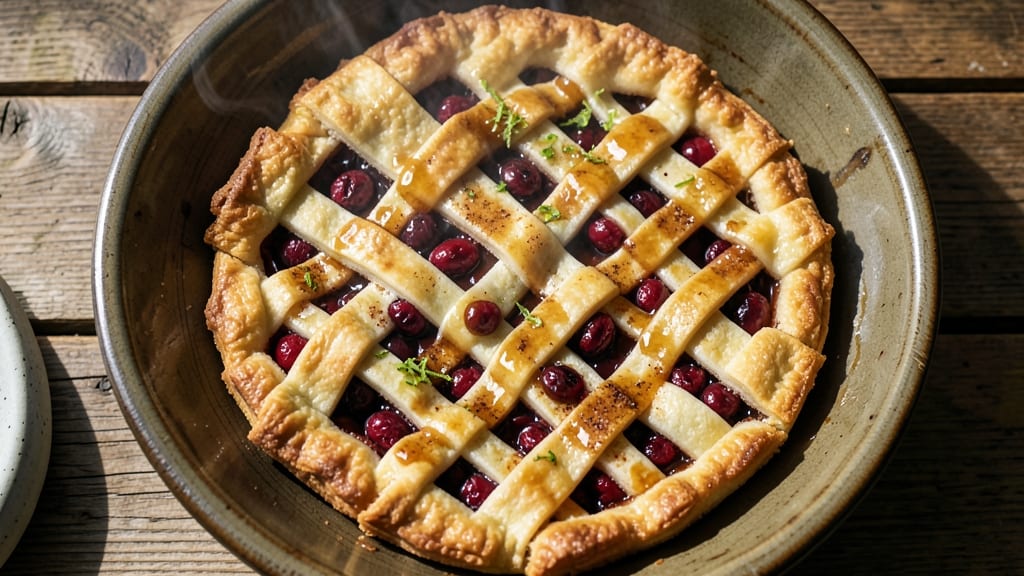
This Juneberry pie recipe captures the wild, tart-sweet essence of summer's fleeting harvest, transformed into a dessert that's both rustic and refined. The secret lies in balancing the pie's natural tartness with just enough sugar and a crispy oat topping that adds texture without overpowering the fruit's delicate flavor.
I first discovered Juneberries while foraging in the Midwest, and their unique taste—somewhere between blueberries and cherries—inspired this recipe that pays homage to their wild origins while delivering restaurant-quality results at home.
The filling requires minimal prep but maximum attention to texture: peeling, pitting, and simmering the fruit until it releases its juices creates a thick, jammy consistency that's the heart of any great pie.
For the crust, I recommend a classic double-crust with a lattice pattern for visual appeal, though a simple oat-streusel topping works beautifully if you prefer simplicity. The oats toast to a golden, crispy finish that contrasts perfectly with the soft, bubbling fruit beneath.
What makes this pie truly special is how it transforms humble wild fruit into something extraordinary—each slice offers layers of flavor from the tart Juneberries, the buttery crust, and that satisfying crunch from the oat topping.
The aroma alone as it bakes will have your kitchen smelling like a summer orchard, and the contrast of temperatures in every bite makes it a showstopper for picnics, potlucks, or family gatherings.
While traditional recipes call for fresh Juneberries, you can substitute with a mix of blueberries and blackberries if wild fruit isn't available. The same techniques apply, ensuring that crispy texture and perfect balance of flavors remain intact.
Let's bring this wild harvest sweetness to your table with a pie that tastes like summer in every bite.
Ingredients for juneberry pie
Wild Juneberries, buttery crust, and golden oat crunch—this pie captures summer's fleeting harvest in every bite.
| Ingredient | Amount | Notes |
|---|---|---|
| Fresh Juneberries 🍒 | 6 cups | Peeled, pitted, and roughly chopped |
| Granulated Sugar 🍚 | 1 ½ cups | Light brown sugar for depth |
| Lemon Juice 🍋 | ¼ cup | Freshly squeezed for brightness |
| Unsalted Butter 🧈 | ½ cup | Cold, cubed for lattice crust |
| All-Purpose Flour 🌾 | 2 ½ cups | Plus 2 tbsp for lattice |
| Ice Water 💧 | ½ cup | For dough elasticity |
| Salt 🧂 | 1 tsp | Fine sea salt preferred |
| Old-Fashioned Rolled Oats 🥣 | 1 ½ cups | For crispy topping |
| Light Brown Sugar 🍚 | ½ cup | Packed for oat topping |
| Chopped Walnuts 🥜 | ½ cup | Toasted for crunch |
| Cinnamon 🌿 | 1 tsp | Ground for warmth |
| Vanilla Extract 🥛 | 1 tsp | Pure for aroma |
| Cornstarch 🌾 | 2 tbsp | For thickening filling |
| Eggs 🥚 | 1 whole | For egg wash |
The Juneberries are the heart of this pie, so prioritize freshness—they should be plump, vibrant, and tart-sweet. If foraging isn't an option, blueberries and blackberries (3 cups total) mimic the flavor profile beautifully. For the crust, King Arthur flour yields the best texture, but any all-purpose works. The oats? Bob's Red Mill old-fashioned toasts to perfect crispness—avoid quick oats, which burn easily. Store Juneberries in the fridge for up to 3 days; freeze extras for future pies.
No Juneberries? Substitute with 3 cups mixed berries—raspberries add tartness, while strawberries soften the filling. For the oat topping, pecans or almonds replace walnuts, though texture changes slightly. The cornstarch is non-negotiable—it thickens the filling without altering flavor. If you lack vanilla, 1 tsp vanilla bean paste or even a scraped vanilla pod works. The egg wash? Whole eggs create a glossy finish, but a beaten egg yolk suffices if you're watching cholesterol.
This pie reheats beautifully—350°F for 10 minutes restores that golden crunch. Store leftovers in an airtight container for 5 days; freeze the whole pie (unbaked or baked) for 3 months. The oat topping stays crisp for 3 days if kept dry. For serving, dust with powdered sugar or a sprinkle of toasted cinnamon—trust me, it elevates every bite.
Why You'll Love This Recipe
- No Fuss Filling: I swear, the filling comes together in one bowl—just toss those tart Juneberries with sugar, a splash of lemon juice, and a pinch of butter until they glisten. No fancy techniques, no waiting for them to soften first. Honestly, it’s the kind of recipe where the hardest part is deciding when to stop tasting the mixture.
- Tart-Sweet Magic: That perfect balance of bright Juneberries and buttery crust? It’s like summer in a slice—juicy, not too cloying, with just enough acidity to keep your mouth watering. The lemon juice isn’t just for flavor; it’s the secret that makes the filling shine without overpowering the berries’ natural tang.
- Picnic to Potluck: This pie travels like a dream—cool enough for a beach day, sturdy enough for a backyard barbecue, and still impressive enough to bring to a potluck. Between us, I’ve had it cold, at room temp, and even reheated with vanilla ice cream, and it’s been a hit every time.
- Waste-Not Crust: The dough uses just five ingredients, and the leftovers? They’re my go-to for quick hand pies or breakfast pastries. I’ll be real: I often make two crusts at once—one for the pie, one for whatever else I’m craving that week. No guilt, just good use of flour and butter.
Step-by-step instructions for Juneberry pie recipe
Transform wild juneberries into a showstopping pie with a golden, crisp oat lattice and velvety filling.
Prepare the Juneberry Filling
In a large bowl, combine the 6 cups of peeled, pitted, and roughly chopped fresh juneberries with the 1.5 cups granulated sugar, 0.25 cup lemon juice, 2 tbsp cornstarch, 1 tsp vanilla extract, and 1 tsp cinnamon. The sugar will begin to draw out juices immediately—this is normal. Let the mixture sit for 15 minutes while you prepare the crust.
After resting, transfer the mixture to a heavy-bottomed saucepan and cook over medium heat for 8-10 minutes, stirring frequently, until the filling thickens to a consistency similar to thick applesauce. You'll know it's ready when it coats the back of a spoon and bubbles gently. Remove from heat and let cool completely before filling the crust—this prevents a soggy bottom.
Make the Pie Crust
Cut the 0.5 cup unsalted butter into small cubes and place in the freezer to firm up slightly. In a large bowl, whisk together the 2.5 cups all-purpose flour, 1 tsp salt, and an additional 2 tbsp flour (for lattice). Add the cold butter cubes and use a pastry cutter or your fingers to work the butter into the flour until the mixture resembles coarse crumbs with pea-sized butter pieces.
Drizzle in the 0.5 cup ice water, 1 tablespoon at a time, mixing gently with a fork until the dough just comes together. Be careful not to overwork it—just until the dough holds when pressed. Form into a disk, wrap in plastic, and chill for 1 hour. This resting period ensures a flaky, tender crust that won't shrink during baking.
Assemble the Pie with Crisp Oat Topping
Preheat your oven to 375°F. On a lightly floured surface, roll out the chilled dough to a 12-inch circle, about 1/8-inch thick. Transfer to a 9-inch pie dish and trim the edges, leaving a 1/2-inch overhang. Press gently into the dish to create a smooth base. Pour in the cooled juneberry filling, mounding it slightly in the center.
For the topping, mix the 1.5 cups old-fashioned rolled oats, 0.5 cup light brown sugar, 0.5 cup chopped walnuts, and 1 tsp cinnamon in a bowl. Spread this mixture evenly over the filling, pressing down lightly. Roll out the dough trimmings and excess dough into strips for a lattice pattern, brushing with the beaten egg for a golden finish.
Bake to Golden Perfection
Bake the pie for 50-55 minutes until the crust is deep golden brown and the filling bubbles vigorously. The oat topping should be crisp and the edges of the lattice should be golden and slightly puffed. If the edges brown too quickly, cover them loosely with aluminum foil after 30 minutes.
Remove from the oven and let cool for at least 2 hours before slicing. This resting period allows the filling to set properly and prevents a runny pie. Serve warm with a dollop of whipped cream or a scoop of vanilla ice cream to complement the tart-sweet juneberry flavor and crisp oat topping.
Pro Tips For Making Juneberry Pie
- Pre-Cook the Berries: DESCRIPTION:
- Chill the Dough: DESCRIPTION:
- Vent the Top Crust: DESCRIPTION:
- Use Browned Butter: DESCRIPTION:
Regional styles of this juneberry pie
Midwest Rustic Style
The heartland approach to Juneberry pie swaps the classic lattice for a thick, flaky crust with a homemade oat crumble that's more rustic than refined.
Here, the focus is on whole-grain flour (like King Arthur White Whole Wheat) for the crust, giving it a nutty depth that pairs perfectly with the tart berries. I like to add 1 tbsp of cornmeal to the crust dough for extra crunch.
The filling stays true to the original—no extra pectin—relying on the natural thickeners in the fruit and cornstarch for structure. This version is all about handmade texture, with a buttery egg wash brushed on the crust right before baking for that signature golden finish. 🥖
Appalachian Mountain Twist
In the Appalachians, Juneberries (called saskatoons here) are often paired with wild blackberry jam in the filling for extra depth. The crust gets a savory twist with 1 tsp of black pepper mixed into the dough, and the oat topping includes chopped pecans instead of walnuts.
I've also seen locals add a thin layer of cinnamon-sugar between the crust and filling for warmth. The pie is traditionally baked in a cast-iron skillet for even heat distribution, and the lattice is replaced with a simple crisscross pattern cut from the same dough.
This version is earthier and slightly spicier, reflecting the region's foraging traditions.
Pacific Northwest Adaptation
Out West, Juneberries are often combined with local huckleberries (if available) to create a dual-fruit filling that's even more complex.
The crust here is gluten-free—using Bob's Red Mill 1:1 baking flour—and the oat topping gets a maple syrup glaze (just 2 tbsp maple syrup mixed with 1 tbsp water) brushed on after baking for a sticky, caramelized finish.
The lattice is replaced with a shingled pattern for visual interest, and the pie is often served with coconut whipped cream to complement the natural sweetness. This version leans into foraged flavors while adapting to modern dietary needs. 🌲
Southern Sweet Tea Version
Down South, Juneberry pie becomes a sweet tea companion, with the filling infused with 1 cup of strong brewed sweet tea (cooled) instead of lemon juice.
The crust is extra buttery (using 3/4 cup butter instead of 1/2), and the oat topping includes dried cranberries for a tart-sweet contrast. I've seen this version topped with toasted meringue for a pie à la mode effect, served with vanilla ice cream.
The pie is baked at 350°F (instead of 375°F) to ensure the tea-infused filling doesn't overcook. This adaptation is all about bold flavors and Southern hospitality.
Modern Minimalist Crust
For a no-fuss approach, skip the lattice entirely and use a single crust with a pre-made oatmeal cookie dough pressed on top. The filling stays the same, but the crust is made with shortcut pie crust mix (like Pillsbury) for convenience.
The oat topping is simplified to 1 cup oats + 1/4 cup melted butter + 2 tbsp brown sugar, baked until crisp. This version is perfect for weeknight desserts—it still delivers that tart-sweet balance without the fuss of homemade dough.
The key is baking the pie on a preheated baking sheet to prevent sogginess. 🍪
Nutrition facts
Frequently asked questions
What's the best way to find fresh Juneberries for this recipe?
Juneberries (also called serviceberries or saskatoons) grow wild in late spring/early summer. Check local foraging groups or farmers' markets—Midwest and Appalachian regions often have them. If unavailable, blueberries and blackberries (3 cups total) work perfectly as a substitute. Foraged fruit should be plump, vibrant, and tart-sweet when ripe.
Can I make this pie without a lattice crust?
The recipe works beautifully with a simple double crust or even a single crust topped with the oat mixture. For extra rustic appeal, try the Midwest style with a thick oat crumble instead of lattice. The key is ensuring the filling is fully cooled before adding toppings to maintain crispness.
Why does my Juneberry filling taste too tart?
Juneberries are naturally tart, but the recipe balances this with 1.5 cups sugar and 0.25 cup lemon juice. If it's still too tart, add 1-2 tbsp more sugar while cooking or reduce lemon juice by 1 tbsp. Taste as you go—simmering longer (up to 12 minutes) also concentrates flavors.
How do I store leftovers to keep the oat topping crisp?
Store the pie in an airtight container at room temperature for 3 days. For longer storage, refrigerate (up to 5 days) or freeze (up to 3 months). To revive crispness, reheat slices at 350°F for 10 minutes or broil for 2-3 minutes. Keep the oat topping dry by covering with parchment paper.
Can I use this recipe for a gluten-free version?
Yes! Replace the all-purpose flour with a 1:1 gluten-free baking flour (like Bob's Red Mill) and ensure your oats are certified gluten-free. The Pacific Northwest adaptation in the recipe already includes a gluten-free crust option. For the oat topping, use certified GF oats to avoid cross-contamination.