
Main Courses
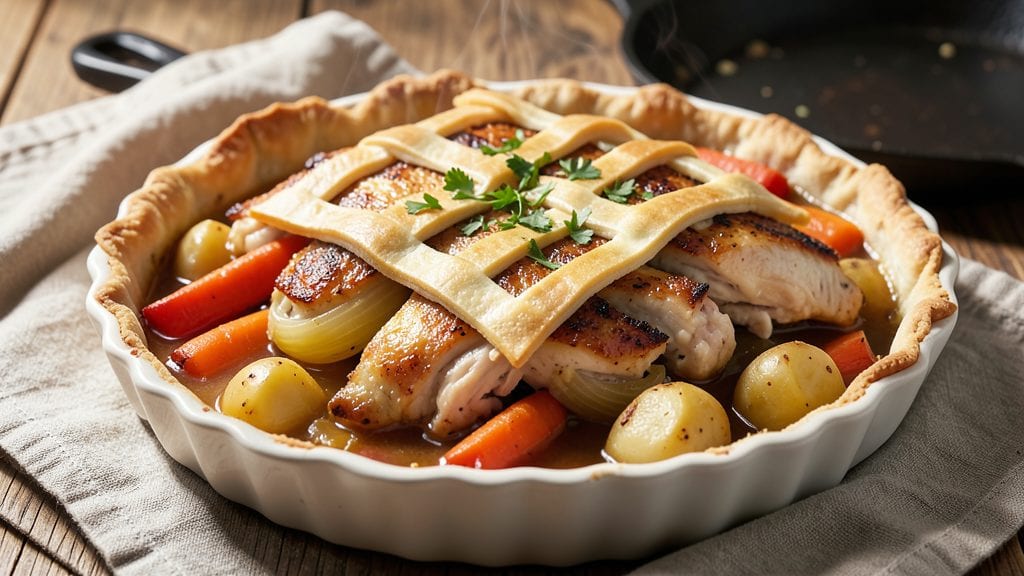
This Grandma's pot pie recipe brings back the warmth of Sunday dinners, where flaky crust meets hearty filling in one comforting dish. The secret lies in a tender, golden crust that encases layers of savory meat, tender vegetables, and rich gravy—just like the ones my grandmother used to make.
That perfect balance of textures and flavors comes from precise techniques, not shortcuts, ensuring every bite tastes like home.
What makes this recipe special is how it transforms simple ingredients into something extraordinary. The filling simmers slowly with chicken, carrots, peas, and potatoes until everything softens just enough to melt in your mouth.
Meanwhile, the crust gets its signature flakiness from cold butter cut into the flour, creating those delicate layers that separate beautifully during baking. It’s the kind of dish that feels like a hug on a chilly evening.
By the time it emerges from the oven, your pot pie will have a flaky crust that’s crisp on the edges and tender underneath, encasing a filling so rich and savory that it disappears faster than you can say "seconds."
The aroma alone—warm, buttery, and full of caramelized vegetables—will have everyone gathering around the table. This is comfort food at its finest, made even better when shared with loved ones.
Serve it with a side of crusty bread to soak up every last drop of gravy, or enjoy it as-is with a simple green salad. The beauty of this recipe is in its versatility—it’s perfect for family dinners, holiday gatherings, or even a cozy night in.
Let’s get started on creating a pot pie that tastes like nostalgia.
Ingredients for grandma's pot pie
Simple ingredients that transform into nostalgic comfort food perfection.
| Ingredient | Amount | Notes |
|---|---|---|
| Boneless Chicken Thighs 🍗 | 1 ½ lb | Trimmed of excess fat |
| All-Purpose Flour 🌾 | 2 ½ cups | For crust, sifted preferred |
| Unsalted Butter 🧈 | 1 cup | Cold, cubed for flakiness |
| Carrots 🥕 | 2 cups | Peeled, sliced into rounds |
| Russet Potatoes 🥔 | 2 medium | Peeled, cut into chunks |
| Yellow Onion 🧅 | 1 whole | Diced, medium size |
| Frozen Peas 🌱 | 1 cup | Thawed, no need to drain |
| Chicken Broth 💧 | 1 ½ cups | Low-sodium preferred |
| Heavy Cream 🥛 | ½ cup | Full-fat for richness |
| Salt 🧂 | 1 ½ tsp | Kosher or sea salt |
| Black Pepper 🌶️ | ½ tsp | Freshly ground preferred |
| Garlic Cloves 🧄 | 3 cloves | Minced for filling |
| Fresh Thyme Leaves 🌿 | 1 tbsp | Or 1 tsp dried thyme |
| Ice Water 💧 | ¼ cup | For dough elasticity |
The butter and flour are non-negotiable for that signature flaky crust. Store-brand butter works fine—just make sure it's cold when you cut it into the flour. I grab my flour from King Arthur since it's sifted and consistent, but any all-purpose will do. The chicken thighs? Buy bone-in if you can—they stay juicier. If you're using pre-cut frozen veggies, check for no added salt. The carrots and potatoes should be firm, not wrinkled. For the thyme, fresh is ideal but dried works in a pinch—just use one-third the amount.
No chicken thighs? Chicken breasts work, but pound them thin so they cook evenly. Short on carrots? Sweet potatoes or parsnips add great flavor. The frozen peas can be swapped for fresh, but don't overcook them—they should stay bright green. For the broth, low-sodium is key—you'll be adding salt later. The heavy cream can be substituted with half-and-half for a lighter version, though it won't be quite as rich. If you're making this ahead, the filling can be prepped and refrigerated for 2 days before adding the crust.
The dough should be chilled for at least 30 minutes before rolling—this prevents shrinking. Wrap it tightly in plastic and store in the fridge for up to 2 days or freeze for 3 months. The assembled pot pie keeps well in the fridge for 4 days—reheat covered at 375°F until bubbly. For leftovers, I always double the recipe so we have pie for lunch the next day. The crust reheats beautifully, just brush it with a little milk before baking to keep it crisp.
Why You'll Love This Recipe
- One-Pan Magic: I swear by this recipe—just brown the chicken, toss in chopped veggies, and dump the dough on top. No fancy techniques, no extra bowls, and honestly? The mess is minimal.
- Creamy Crispy Perfection: That buttery crust over tender chicken and caramelized potatoes? It’s the kind of contrast that makes you close your eyes and sigh. The carrots add just enough sweetness to balance the savory.
- Leftovers That Don’t Suck: Between us, most pot pies turn into sad, soggy leftovers. Not this one. The crust stays crisp, the filling reheats beautifully, and I’ve packed it for lunches three times this week—no complaints.
- Budget-Friendly Feast: Chicken thighs, potatoes, and carrots stretch into a meal that feeds four for under $15. It’s the kind of dish that makes you feel like you’re serving a restaurant-worthy meal without breaking the bank.
Step-by-step instructions for Grandma's pot pie recipe
Here's how to build that signature flaky crust and rich filling that makes this pot pie legendary.
Prepare the Chicken and Vegetable Filling
Start by patting the boneless chicken thighs dry with paper towels. Season both sides generously with 1.5 teaspoons salt and 0.5 teaspoon black pepper, then heat 1 tablespoon of the unsalted butter in a large skillet over medium-high heat. Once the butter foams, add the chicken and cook for 5-6 minutes per side until golden brown and cooked through. Remove the chicken and set aside.
In the same skillet, add the remaining 1 cup unsalted butter and melt it over medium heat. Add the diced yellow onion and cook for 3-4 minutes until softened. Stir in the minced garlic cloves and cook for 30 seconds until fragrant. Add the peeled and sliced carrots and cook for 5 minutes. Toss in the peeled and chunked russet potatoes and cook for another 5 minutes until they begin to soften.
Pour in the 1.5 cups chicken broth and scrape up any browned bits from the bottom of the pan. Bring to a simmer, then reduce heat to low and let it cook for 10 minutes. Stir in the thawed frozen peas, the cooked chicken, and the 1 tablespoon fresh thyme leaves. Keep the mixture warm while you prepare the crust.
Make the Flaky Pie Crust
In a large bowl, combine the 2.5 cups all-purpose flour and 1.5 teaspoons salt. Cut in the 1 cup cold, cubed unsalted butter using a pastry cutter or your fingers until the mixture resembles coarse crumbs with pea-sized butter pieces. This is crucial for that signature flakiness.
Sprinkle the 0.25 cup ice water over the mixture, one tablespoon at a time, mixing gently with a fork. Only add water until the dough just comes together when pressed. Avoid overmixing—just combine until the dough holds together. Turn the dough out onto a lightly floured surface and knead it 4-5 times until smooth.
Wrap the dough in plastic wrap and refrigerate for 30 minutes. This resting time relaxes the gluten and makes rolling out easier. While it chills, preheat your oven to 375°F. Roll out the dough on a lightly floured surface to a 12-inch circle, about 1/8-inch thick. Transfer it to a 9-inch pie dish and trim the edges, leaving a 1-inch overhang. Fold the overhang under to create a neat rim.
Assemble and Bake the Pot Pie
Pour the warm chicken and vegetable filling into the prepared pie crust. Drizzle the 0.5 cup heavy cream evenly over the top. The cream adds richness and helps create that signature velvety texture. Sprinkle any remaining thyme leaves over the top for extra flavor.
Cut the remaining 1/2 cup cold, cubed unsalted butter into small pieces and dot them over the filling. This creates pockets of steam during baking, which makes the crust extra flaky. Fold the underhang over the edge of the pie dish to seal the crust. Cut 4-5 slits in the top crust to allow steam to escape.
Bake the pot pie in the preheated 375°F oven for 45-50 minutes, or until the crust is golden brown and the filling is bubbling through the slits. If the edges start to brown too quickly, cover them loosely with aluminum foil. For the last 5 minutes, increase the heat to 400°F to get that perfect golden color on the crust.
Rest and Serve for Maximum Flakiness
Remove the pot pie from the oven and let it rest for 10-15 minutes before slicing. This resting time allows the filling to set slightly and the juices to redistribute, ensuring every bite is moist and flavorful. The crust will be at its flakiest after this rest.
Serve warm with a side of crusty bread or a simple green salad. The contrast of the flaky, buttery crust with the rich, savory filling is what makes this pot pie a classic. Store any leftovers in the refrigerator for up to 3 days or freeze for up to 3 months. Reheat in the oven at 350°F for 20-25 minutes to refresh the crust.
Pro Tips For Making Grandma'S Pot Pie
- Sear the Chicken First: I learned this the hard way—skipping the sear makes the filling taste bland. Brown the chicken thighs in batches over medium-high heat until golden before adding anything else. That crusty bit? It’s where all the flavor hides.
- Parboil the Potatoes: Russets soak up liquid like sponges, turning your filling into soup. Cut them into even ½-inch chunks, then boil for 5 minutes before adding to the pot pie. This keeps them tender without dissolving into mush.
- Don’t Overwork the Dough: I used to knead the flour-butter crust until it was smooth, but that makes it tough. Just mix cold butter into the flour with your fingers until pea-sized clumps form—no need to roll it out more than twice. Less handling = flakier crust.
- Save the Chicken Juices: After removing the chicken, leave those juices in the pot. Deglaze with a splash of broth or water, scraping up the browned bits—this adds depth the filling sorely misses. (Yes, even if you’re impatient like me.)
Wine and beer pairings for this dish
Classic White Wine
For this hearty pot pie, I always reach for a Chardonnay from California or a Sauvignon Blanc from New Zealand.
The crisp acidity and subtle fruit notes in a 2019 Kendall-Jackson Chardonnay cut through the richness of the butter and cream, while a 2021 Cloudy Bay Sauvignon Blanc brings bright citrus that refreshes your palate.
Serve it slightly chilled—around 50°F—to enhance its crispness and let it complement the warm, savory filling. 🍷
Rich Red Options
If you prefer red wine, a Pinot Noir from Oregon or a Gamay from Beaujolais works beautifully. The lighter body of a 2020 Domaine Serene Pinot Noir won’t overpower the dish, while a 2021 Beaujolais-Villages Gamay adds a juicy, berry-forward note that pairs wonderfully with the thyme and chicken.
Let the wine breathe for 10-15 minutes before pouring to soften its tannins and bring out its fruitiness.
Craft Beer Pairings
A honey brown ale or amber lager is my go-to beer pairing for pot pie. The malty sweetness of a New Belgium Fat Tire balances the savory filling, while the effervescence cleanses your palate between bites.
For a lighter option, try a crisp German Pilsner like Warsteiner—its herbal notes echo the thyme in the pie. Serve the beer well-chilled (38-40°F) to highlight its refreshing qualities. 🍺
Cider for Cozy Vibes
Don’t overlook dry hard cider as a pairing—it’s perfect for pot pie’s comforting flavors. A strong, dry cider like Strongbow Original or a French Poiré adds a touch of apple brightness that contrasts nicely with the buttery crust.
The slight tartness also enhances the savory depth of the filling. Chill it to 45°F for the best experience, especially on a chilly evening.
After-Dinner Digestif
End your meal with a sherry or port to complement the pie’s richness. A Pedro Ximénez sherry (sweet and nutty) or a Ruby Port (fruity and smooth) pairs wonderfully with the buttery crust and creamy filling.
Serve the sherry at room temperature and the port slightly warmed (60°F) to enhance their flavors. These drinks add a luxurious finish to your cozy meal. 🍷
Nutrition facts
Frequently asked questions
Can I make this pot pie ahead of time?
Assemble the pot pie completely (including the crust) and refrigerate it for up to 24 hours before baking. For best results, bake it straight from the fridge at 375°F for 5-10 extra minutes. You can also freeze the unbaked pot pie for up to 3 months—just thaw it overnight in the fridge before baking.
Why is my crust soggy instead of flaky?
The most common causes are overmixing the dough or not pre-cooling the filling. Always keep the butter cold when cutting it into the flour, and avoid overworking the dough. Also, make sure your filling is fully cooked and drained before adding the crust. For extra insurance, brush the bottom crust with a thin layer of egg wash before adding the filling.
Can I use store-bought pie crust instead?
Yes, but for that signature flaky texture, homemade is best. If you must use store-bought, choose a double-crust pastry and brush the top with melted butter before baking. For a shortcut, you can also make a quick crust by mixing 1.5 cups flour, 0.5 cup cold butter, and 3 tablespoons ice water—it won’t be as flaky but still delicious.
What vegetables can I substitute for the carrots and potatoes?
This recipe is very flexible! Swap carrots for sweet potatoes, butternut squash, or turnips. For potatoes, try parsnips or celery root. Just adjust cooking times—root vegetables take longer to soften. Keep the total volume similar to maintain the filling’s consistency.
How do I reheat leftovers without drying out the crust?
Reheat at 350°F for 20-25 minutes covered with foil, then uncover for the last 5 minutes to crisp the top. For a quicker method, cover with a damp paper towel and microwave for 1-2 minutes, then finish under the broiler for 30 seconds to restore crunch. Always reheat slowly to preserve moisture.