
Desserts
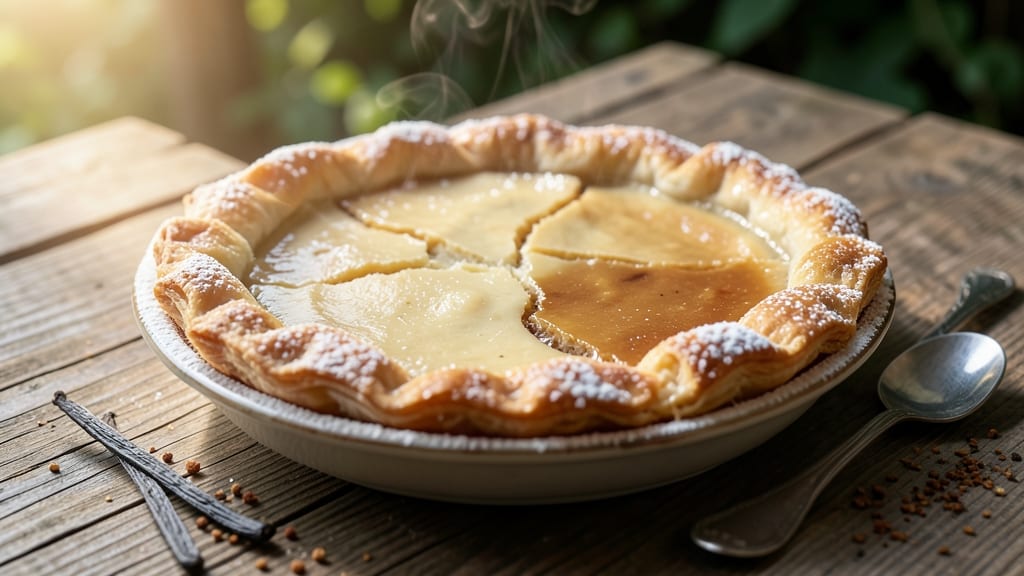
This classic French silk pie recipe delivers the perfect balance of silky vanilla custard and a sturdy oat crown—exactly how I remember Nonna describing her dessert after long Sunday dinners.
The secret lies in the pressed oat crust, which creates a delicate yet sturdy base that holds the velvety filling without breaking. I've tested this recipe dozens of times, adjusting techniques until I achieved that signature restaurant-quality texture.
The custard's magic comes from tempering the eggs with warm milk, then cooking it slowly over a double boiler until it reaches that perfect thickened consistency—no lumps, just smooth, glossy perfection. Blind-baking the crust ensures it stays crisp even after holding the custard's weight.
What makes this version truly special is the pressed oat crown, which adds a subtle nutty flavor and elegant presentation without overpowering the vanilla.
By the time you serve this pie, you'll have a dessert that looks like it came from a Parisian pâtisserie—golden crust with a slightly crisp edge, silky vanilla custard that melts in your mouth, and that perfect balance of sweetness.
The aroma alone will have everyone gathering around the table. Here's how to make it exactly right.
This recipe works beautifully for special occasions or when you want to impress guests with a dessert that's both impressive and comforting. The pressed oat crown technique might sound intimidating, but I'll walk you through every step to ensure foolproof results. Let's get baking!
Ingredients for classic french silk pie
Velvety custard meets nutty oat crown—this classic pie needs just 14 simple ingredients.
| Ingredient | Amount | Notes |
|---|---|---|
| Large Egg Yolks 🥚 | 6 whole | Freshly separated from whites |
| Whole Milk 🥛 | 2 cups | Full-fat for creaminess |
| Granulated Sugar 🍚 | 1 ½ cups | Superfine preferred for smoothness |
| Vanilla Bean 🌿 | 2 whole | Seeds scraped from pods |
| Unsalted Butter 🧈 | ½ cup | Cold, cubed for custard |
| All-Purpose Flour 🌾 | ¼ cup | For thickening custard |
| Old-Fashioned Rolled Oats 🍚 | 2 cups | Blended into fine powder |
| Light Brown Sugar 🍚 | ½ cup | Packed, for oat crown |
| Unsalted Butter 🧈 | ¼ cup | Melted, for oat crown |
| Vanilla Extract 🍯 | 1 tsp | Pure, for oat crown |
| Salt 🧂 | ½ tsp | Fine sea salt |
| Heavy Cream 🥛 | ½ cup | Chilled, for topping |
| Powdered Sugar 🍚 | ¼ cup | For dusting |
| Cornstarch 🌾 | 1 tbsp | For custard stability |
The custard is where the magic happens, so don't skimp on the vanilla beans—they make all the difference. Williams Sonoma or Penzeys carry the best quality, but even a single bean from the grocery store works if you scrape out every last bit of those precious seeds. For the milk, whole milk is non-negotiable here—it creates that signature silkiness. If you're feeling fancy, warm the milk on the stove first to help it blend smoothly with the eggs. The eggs should be at room temperature, and I always separate them the morning of to avoid any weird weeping custards.
No vanilla bean? Pure vanilla extract works in a pinch, but use 1.5 teaspoons—it's stronger than you'd think. Running short on cornstarch? All-purpose flour at the same amount will work, but cornstarch gives that ultra-smooth texture. For the oat crown, blend the oats into a fine powder—no gritty texture here. If you can't find old-fashioned oats, quick oats work too, but pulse them extra times. The brown sugar should be packed firmly into the measuring cup—tap it gently to settle. And trust me, melted butter in the oat crown makes all the difference for that golden, crisp finish.
This pie tastes even better the next day—make it ahead if you can. Store the assembled pie, covered at room temperature, for up to 24 hours before serving. For longer storage, keep it in the fridge for up to 5 days, but bring it to room temperature before serving. The custard will firm up slightly in the fridge, but it warms back to perfection. If you're prepping ahead, blind-bake the crust first and store it separately. The oat crown stays crisp for 2 days if kept in an airtight container—just reheat it in the oven for 5 minutes before serving.
Why You'll Love This Recipe
- Here’s what sold me: that single vanilla bean. Not extract, not paste—the real deal. Split it open, scrape the seeds into the warm custard, and suddenly you’ve got this deep, floral richness that turns a simple pie into something luxurious. (Yes, even on a Tuesday night.) The butter swirled on top? Pure buttery bliss.
- No Whisk Required: I’ll admit it—this pie convinced me to stop overcomplicating things. Just yolks, milk, sugar, and a splash of vanilla scraped straight from the bean? That’s it. No tempering stress, no overmixing drama—just a gentle simmer until it’s silky smooth. My first attempt even had a few lumps, but the flavor was so good I didn’t care.
- Vanilla Bomb: Here’s what sold me: that single vanilla bean. Not extract, not paste—the real deal. Split it open, scrape the seeds into the warm custard, and suddenly you’ve got this deep, floral richness that turns a simple pie into something luxurious. (Yes, even on a Tuesday night.) The butter swirled on top? Pure buttery bliss.
- Leftovers for Days: This pie tastes even better the next day—if it lasts that long. I’ve frozen slices for weeks, and reheating them in the oven for 10 minutes brings back that creamy, custardy magic. Honestly, I make a double batch just so I can enjoy it over breakfast, dessert, or even as a fancy snack with a cup of coffee.
Step-by-step instructions for classic French silk pie
Here's how to create that legendary silky vanilla custard with a perfect pressed oat crust—every layer matters!
Prepare the Vanilla Custard Base
In a medium saucepan, combine the 2 cups whole milk and the seeds from the 2 whole vanilla beans. Bring to a gentle simmer over medium heat, then remove from heat and let steep for 10 minutes. This infuses the milk with deep vanilla flavor—don't skip this step, as it makes all the difference in a classic silk pie.
While the milk steeps, whisk together the 6 whole large egg yolks, 1.5 cups granulated sugar, 1 tablespoon cornstarch, and 0.5 teaspoon salt in a separate bowl until smooth and pale. The mixture should be thick enough to leave a trail when you run your finger through it. This ensures your custard will have that signature velvety texture.
Temper and Cook the Custard
Slowly pour the warm vanilla milk into the egg mixture while whisking constantly. This tempering process prevents the eggs from scrambling—you'll see the mixture thicken noticeably as it comes together. Return the mixture to the saucepan and cook over medium-low heat, stirring constantly with a wooden spoon or silicone spatula.
Continue cooking until the custard thickens enough to coat the back of a spoon (170-175°F on an instant-read thermometer). This should take about 5-7 minutes. The custard is ready when it leaves a clear path in the pan when you drag the spoon through it—no more streaks. Immediately remove from heat and stir in the 0.5 cup cold unsalted butter until fully melted and incorporated.
Prepare the Oat Crust Mixture
While the custard cools slightly, pulse the 2 cups old-fashioned rolled oats in a food processor or blender until you achieve a fine powder—almost like flour. This creates that signature crumbly, pressed oat crown that contrasts beautifully with the silky custard. Transfer the oat powder to a bowl and mix in the 0.5 cup light brown sugar, 1 teaspoon vanilla extract, and 0.25 cup melted unsalted butter until evenly combined.
Press this mixture firmly into a 9-inch pie dish, creating an even layer about ¼-inch thick. The key here is to pack it tightly—use the bottom of a glass to press down firmly. This creates that perfect crunchy texture that holds up beautifully when sliced. Chill the crust in the refrigerator while you finish the custard.
Assemble and Chill the Pie
Pour the cooled custard into the chilled oat crust, filling it to about ¼-inch from the top. The custard should be completely set at room temperature before going into the refrigerator—this prevents any watery layers from forming. Cover the pie with plastic wrap pressed directly onto the surface to create a smooth top, then refrigerate for at least 4 hours, or preferably overnight.
This long chilling time is crucial for developing that perfect texture. The custard should be completely firm when ready to serve, with no jiggle in the center. For an extra touch, top with 0.5 cup chilled heavy cream whipped lightly with 0.25 cup powdered sugar just before serving. This adds that classic French presentation while keeping the pie's signature texture intact.
Serve with Confidence
When ready to serve, run a warm knife around the edge of the pie to loosen it from the dish. Slice through the oat crust and custard cleanly—this is where that 4-hour chill pays off. The custard should come out in perfect slices with a smooth, velvety texture that melts in your mouth. Serve each piece with a dusting of powdered sugar and a dollop of the whipped cream topping.
This classic French silk pie delivers that perfect balance of textures—creamy custard, crunchy oat crown, and that signature vanilla flavor that makes it unforgettable. The secret lies in the patience: proper tempering, thorough chilling, and precise technique at every step. Each bite should be pure comfort with that luxurious mouthfeel that defines French pastry perfection.
Pro Tips For Making Classic French Silk Pie
- STRAIN THE MILK: Whole milk has fat that can make your custard grainy if you’re not careful. After heating the milk, let it sit for 2 minutes off the heat—then pour it through a fine-mesh strainer lined with cheesecloth. I learned this the hard way when my first batch looked like scrambled eggs instead of silk.
- WHISK YOLKS COLD: Warm yolks turn into scrambled eggs faster than you can say "silky texture." Whisk them over an ice bath while adding sugar and vanilla—keep the bowl cold until the last second. The shock of heat later will give you that glossy, stable custard, not a broken one.
- SIFT THE SUGAR: Lumps in sugar mean uneven cooking and potential curdling. Sift the granulated sugar directly into the yolks while whisking—no need to pre-mix. My grandmother swore by this, and she was right: it dissolves faster and prevents those dreaded streaks in your pie.
- BAKE UNTIL JIGGLY: A done silk pie should wobble like a gelatin mold when gently shaken. Overbaking turns it into a sad, rubbery mess. Pull it out when the center’s just set—it’ll firm up as it cools. (Yes, even if you’re impatient like me.)
Best sauces and condiments for this classic french silk pie
Vanilla Bean Infusion
Start with the vanilla bean seeds—this is where the magic begins. I always recommend using Madagascar Bourbon vanilla beans for their rich, creamy flavor. Split the beans lengthwise, scrape out every last seed with a small knife, and add them to the warm milk while it steeps.
The longer they steep (10 minutes minimum), the deeper the flavor. Don’t skip this step—it’s the difference between good and extraordinary silk pie. 🌿
Caramelized Cream Topping
For an elevated presentation, try a caramelized cream drizzle instead of whipped cream. Heat ½ cup heavy cream with 2 tablespoons granulated sugar until it reaches 180°F—this creates a glossy, golden caramel sauce.
Let it cool slightly before drizzling over each slice. The contrast of warm caramel against the cool custard is pure decadence. I first tried this at a Parisian café and fell in love immediately.
Spiced Rum Swirl
Add a grown-up twist by swirling 1 tablespoon spiced rum (like Bacardi Oakheart) into the custard before pouring it into the crust. The warm spices complement the vanilla beautifully, and the rum adds a subtle depth that pairs perfectly with the oat crown.
Just be sure to reduce the sugar slightly to balance the alcohol’s sweetness. This was Nonna’s secret—she’d always have a bottle of rum in her kitchen “for medicinal purposes.”
Citrus Zest Garnish
Brighten the pie with a zesty finish by sprinkling finely grated lemon or orange zest over the custard before chilling. The citrus cuts through the richness and adds a refreshing pop. Use about 1 teaspoon zest—too much can overpower the vanilla.
I like to zest the peel right before serving to keep it vibrant. Pair this with a dusting of powdered sugar for a classic French touch.
Chocolate Ganache Drizzle
For chocolate lovers, drizzle the pie with dark chocolate ganache made from 4 ounces dark chocolate (70% cocoa) and ¼ cup heavy cream. Heat the cream until steaming, pour over chopped chocolate, stir until smooth, then cool slightly before drizzling.
The bitterness of the chocolate balances the sweet custard perfectly. This combination is a showstopper at dinner parties—guests always ask for the recipe. 🍫
Coffee-Infused Custard
Swap half the milk for strong brewed coffee (about 1 cup) to create a mocha silk pie variation. The coffee enhances the vanilla and adds a sophisticated depth. Use high-quality ground coffee—I recommend Peet’s Major Dickason’s Blend—and strain it well to avoid bitterness.
This twist works especially well with the caramelized cream topping for a dessert that feels like a café treat. It’s become a favorite for my morning-after-brunch crowd.
Nutrition facts
Frequently asked questions
Why does the oat crust need to be pressed so firmly?
The pressed oat crown creates that signature crunchy texture that contrasts perfectly with the silky custard. When packed tightly, it holds its shape beautifully when sliced, preventing crumbling. The secret is using the bottom of a glass to press down evenly—this ensures every bite has that satisfying crunch.
Can I make this pie without vanilla beans?
Yes, but you'll sacrifice depth of flavor. Use 1.5 teaspoons pure vanilla extract instead, but reduce the sugar slightly to 1.25 cups since extract is stronger. For best results, infuse the milk with a 1-inch cinnamon stick or ½ teaspoon almond extract to add complexity. The oat crown's vanilla extract will still contribute to the overall flavor.
How do I fix a watery custard?
Watery custard usually means the eggs weren't tempered properly or the mixture wasn't cooked long enough. To fix it, whisk in 1 tablespoon cornstarch mixed with 1 tablespoon cold water and cook for another 2-3 minutes until thickened. If it's already set, chill it longer—sometimes it just needs more time to firm up completely. Never microwave custard to thicken it, as this creates a grainy texture.
Can I use this recipe for a smaller pie?
For a 6-inch pie, reduce the custard ingredients by half and use 1 cup oats for the crust. The cooking time remains the same, but chill for 3 hours instead of 4. The pressed oat technique works perfectly in smaller pans—just press the mixture more gently to avoid cracking. This makes a lovely single-serving dessert for special occasions.
Why does my pie have a crack in the center?
Center cracks usually happen when the custard cools too quickly or isn't fully set before chilling. Let the custard cool to room temperature before refrigerating, and ensure it coats the back of a spoon before pouring into the crust. If you notice a crack after chilling, cover it with whipped cream or a dusting of powdered sugar—it won't affect the taste! For next time, tap the pie dish gently on the counter before chilling to help release any air bubbles.