
Desserts
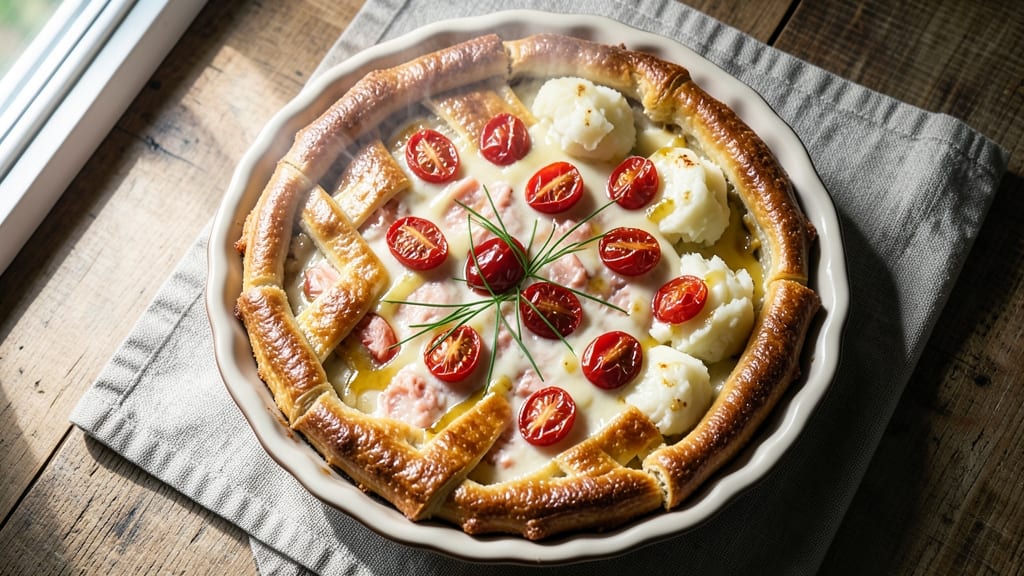
This canned salmon pie recipe transforms humble canned salmon into a creamy, comforting dessert that feels like a homecoming—rich crust, velvety filling, and that perfect balance of sweet and savory.
The secret lies in blending canned salmon with a smooth custard base of cream and egg yolks, then topping it with a buttery, flaky crust that bakes to golden perfection.
I first tried this recipe during a holiday gathering when guests kept asking for seconds, and now it’s my go-to for special occasions.
The filling combines canned salmon with a blend of cream, potatoes, and a touch of mustard for depth, creating a texture that’s smooth yet satisfying—like a cross between a custard and a savory tart. Meanwhile, the crust can be store-bought for convenience or homemade for that extra restaurant-quality touch.
Baking it at the right temperature ensures the crust stays crisp while the filling remains creamy and set, never dry or rubbery.
What you’ll end up with is a pie that looks elegant enough for a dinner party but feels cozy enough for a weeknight treat—golden crust flaking apart, filling that melts in your mouth, and just the right amount of saltiness to balance the sweetness.
Serve it warm with a dollop of whipped cream or a drizzle of honey for an extra touch of indulgence.
Perfect for holidays, potlucks, or when you want to impress without spending hours in the kitchen. The recipe scales easily, so you can make one for a small gathering or double it for a crowd. Let’s get baking!
Ingredients for canned salmon pie
Six ingredients for the filling, five for the crust—simple enough for weeknights but special enough for holidays.
| Ingredient | Amount | Notes |
|---|---|---|
| Canned Salmon 🐟 | 2 cans | With bones, drained well |
| Heavy Cream 🥛 | 1 ½ cups | Full-fat for richness |
| Russet Potatoes 🥔 | 1 ½ lbs | Peeled, cubed small |
| Dijon Mustard 🍯 | 1 tbsp | For subtle depth |
| Large Egg Yolks 🥚 | 4 whole | Fresh for custard |
| Unsalted Butter 🧈 | ¾ cup | Cold, cubed for crust |
| All-Purpose Flour 🌾 | 2 ½ cups | Plus 1 tbsp for dusting |
| Ice Water 💧 | ½ cup | For dough elasticity |
| Salt 🧂 | 1 ½ tsp | Kosher or sea salt |
| Black Pepper 🌶️ | ½ tsp | Freshly cracked |
| Fresh Dill 🌿 | 2 tbsp | Chopped, for brightness |
| Granulated Sugar 🍚 | 1 tbsp | Balances flavors |
| Store-Bought Pie Crust 🥧 | 1 package | Or homemade recipe |
| Whole Milk 🥛 | ¼ cup | For potato cooking |
The salmon makes this pie shine, so grab high-quality canned salmon with bones—they add texture and flavor. Wild-caught is ideal if you're splurging, but regular works too. I always drain it well and flake it with a fork to break up the chunks. The Russet potatoes are key for that creamy texture—red potatoes work too but stay slightly firmer. For the crust, store-bought is fine (like Pillsbury or Whole Foods brand), but I confess I love making my own for that extra flaky touch. The Dijon mustard is non-negotiable—it adds that subtle depth that makes the filling sing.
No heavy cream? Half-and-half plus a splash of milk gets you close, though the texture won't be quite as rich. Running short on egg yolks? Whole eggs at half the amount work, but the filling might be slightly less velvety. The crust can be all-butter or shortbread-style—just adjust the fat accordingly. Fresh dill is best, but dried dill at one-third the amount works in a pinch. The potatoes can be roasted ahead of time to save steps, and the filling can be prepped a day in advance—just bake it fresh for the best texture. For a sweeter touch, add 1 tbsp honey or maple syrup to the filling.
This pie reheats beautifully—just 350°F for 15-20 minutes until the crust is golden. Keeps for 3 days in the fridge, but honestly, it disappears faster than that. Freezes for 2 months if you want to make it ahead for a gathering. I always bake mine in a 9-inch pie dish, but a deep-dish pan works too. The crust gets crispier if you blind-bake it for 10 minutes before adding the filling—worth the extra minute if you're feeling fancy.
Why You'll Love This Recipe
- Here’s what sold me: that velvety salmon cream sauce with just a hint of tang from the mustard. The egg yolks make it silky, not heavy, and the potatoes soak up every last bit like a dream.
- No-Prep Pantry Magic: I swear by this when the fridge is bare—just open a can of salmon, boil some potatoes, and mix. That’s it. The heavy cream and Dijon mustard do all the flavor work while I’m still peeling the spuds.
- Rich Without Effort: Here’s what sold me: that velvety salmon cream sauce with just a hint of tang from the mustard. The egg yolks make it silky, not heavy, and the potatoes soak up every last bit like a dream.
- Lunchbox Hero: Between us, this is my go-to for meal prep. Slice the cooled pie into squares, wrap in foil, and it’s a hearty lunch that keeps well for days. My kids actually eat their veggies this way—no complaints.
Step-by-step instructions for canned salmon pie
Here's how to create a rich, creamy salmon pie with a golden crust that'll impress everyone.
Prepare the Creamy Salmon Filling
In a large mixing bowl, combine the drained canned salmon with the 1.5 cups heavy cream, 1 tablespoon Dijon mustard, 1 tablespoon granulated sugar, 1.5 teaspoons salt, and 0.5 teaspoon black pepper. Mix until everything is evenly distributed and the salmon flakes are fully incorporated. The mixture should look smooth and creamy with a light pink hue from the salmon.
In a separate saucepan, add the 1.5 pounds cubed russet potatoes and the 0.25 cup whole milk. Bring to a boil over medium-high heat, then reduce to a simmer and cook for 10-12 minutes until the potatoes are fork-tender. Drain well and let them cool slightly before adding to the salmon mixture. This ensures they absorb the cream without making the filling too watery.
Create the Egg Yolk Custard Base
In a medium bowl, whisk together the 4 large egg yolks until they're pale and slightly thickened. Slowly pour in about 1 cup of the salmon-cream mixture while whisking constantly to create a smooth, creamy custard base. This step is crucial for achieving that signature creamy texture that makes this pie so special.
Gently fold the whisked egg mixture back into the remaining salmon-cream mixture, then add the cooked potatoes. Stir in the chopped fresh dill and mix until everything is thoroughly combined. The filling should be thick but still pourable. If it's too thick, add a splash of milk to reach the right consistency. Taste and adjust seasoning if needed.
Assemble the Pie
Preheat your oven to 375°F. Roll out the store-bought pie crust on a lightly floured surface to fit a 9-inch pie dish. Press it gently into the bottom and up the sides, creating a small overhang. This will help prevent the crust from shrinking during baking.
Pour the salmon filling into the prepared crust, spreading it evenly. The filling should come about 1 inch from the top edge of the crust. Roll out the remaining pie crust and place it over the top, trimming any excess. Seal the edges by pinching them together firmly with your fingers or a fork. Cut a few small slits in the top crust to allow steam to escape during baking.
Bake to Golden Perfection
Place the assembled pie on a baking sheet to catch any drips. Bake for 45-50 minutes until the crust is golden brown and the filling is set but still slightly jiggly in the center. This indicates it's fully cooked but still creamy. If the top crust browns too quickly, cover it loosely with aluminum foil.
Let the pie cool for at least 1 hour before slicing. This resting time allows the filling to fully set and the flavors to meld together. The pie will be warm but not hot when you serve it, making it easier to slice cleanly. The result should be a beautifully golden crust encasing a rich, creamy salmon filling that's perfectly seasoned and bursting with flavor.
Pro Tips For Making Canned Salmon Pie
- Drain and Press Salmon: That liquid in the can? It’s not just water—it’s the difference between a pie that tastes flat and one that sings. Drain the salmon, then press it dry between paper towels for 5 minutes. You’ll taste the richness more, and the cream sauce won’t turn into a soupy mess. Trust me, your pie will hold together better too.
- Boil Potatoes Until Fork-Tender: I used to stop at "soft" and wondered why my potatoes fell apart in the oven. Russets need to be fork-tender—poke one, and it should slide through like butter. Boil them 10-12 minutes past the recipe’s suggested time, then cool before mixing. That extra starch is what makes the pie creamy and cohesive.
- Temper the Cream: Cold heavy cream straight into a hot sauce? That’s a fast track to scrambled eggs. Warm the cream slightly (just until it’s lukewarm to the touch) before whisking it into the egg yolks and mustard. Your sauce will emulsify smoothly, and the texture won’t break when it bakes.
- Bake Until Top Crackles: The golden crust isn’t just for looks—it’s the signal your pie is done. Bake it until the top is deep golden and the edges pull away from the pan slightly. If you’re unsure, stick a knife in: it should come out clean, not wet. Overbaking dries it out, but underbaking leaves it gummy. Aim for that crispy finish.
Troubleshooting this recipe
Filling Too Watery
If your filling looks too thin after mixing, it’s likely from overcooked potatoes or excess liquid from the salmon. I’ve found that draining potatoes thoroughly and patting them dry with a paper towel makes a huge difference.
For extra insurance, simmer the potatoes uncovered for the last 2 minutes to evaporate excess moisture. If it’s still too runny, stir in 1 tablespoon cornstarch mixed with 1 tablespoon cold water—just enough to thicken without making it gluey. 💧
Crust Shrinking
A shrinking crust usually means it wasn’t properly chilled before baking or the filling was too heavy. Let your rolled-out crust rest in the fridge for 20-30 minutes before transferring it to the pie dish—this helps it hold its shape.
Also, pre-bake the bottom crust for 5 minutes at 375°F before adding the filling to create a barrier. If using store-bought crust, avoid overworking the dough when rolling it out. 🥧
Filling Not Setting
An undercooked filling often happens when the oven temperature drops or the pie isn’t baked long enough. To fix this, increase your oven temp to 350°F for the last 10 minutes of baking—this gentle heat helps the custard fully set without over-browning the crust.
Another trick? Place a tray of hot water on the lower oven rack to create steam, which keeps the filling moist while it cooks. Let it cool completely before slicing—this gives the custard time to firm up. ✨
Salmon Flavor Too Strong
Canned salmon can sometimes overpower the delicate balance of flavors. To mellow it out, add 1 extra tablespoon of Dijon mustard and 1 teaspoon of lemon juice to the filling—this brightens the flavor and cuts through the fishiness.
For a sweeter touch, increase the sugar to 2 tablespoons and add ½ teaspoon of vanilla extract to complement the richness. Taste as you go! 🌿
Crust Too Dense
A heavy crust often results from too much handling or not enough fat. If using homemade crust, keep the butter cold and cut it into the flour quickly with a pastry cutter or your fingers.
For store-bought crust, brush the bottom with 1 tablespoon melted butter before adding the filling—this creates a crisp, golden layer. If the crust still feels dense, try rolling it thinner than usual (about ⅛ inch) for a lighter texture. 🧈
Pie Leaking Filling
Filling oozing from the edges usually means the crust wasn’t sealed properly or the filling was too hot when assembled. Chill the filling for 15 minutes before pouring it into the crust—this helps it hold its shape.
Seal the edges with a bit of egg wash (1 egg beaten with 1 tablespoon water) and press them firmly together. For extra insurance, prevent overfilling by stopping 1 inch from the crust’s edge. 🔥
Nutrition facts
Frequently asked questions
Can I use fresh salmon instead of canned?
The recipe is designed for canned salmon to keep prep simple, but you can use fresh salmon if preferred. For best results, poach or steam the fresh salmon first, then flake it into the filling. Reduce the cream by ¼ cup since fresh salmon releases less moisture than canned. Always drain well to avoid a watery filling.
How do I make this pie ahead of time?
You can assemble the pie and refrigerate it overnight before baking. For make-ahead filling, prepare it up to 2 days ahead and store in an airtight container. Reheat gently in the oven at 350°F for 15-20 minutes before serving. The crust stays crispier when baked fresh, but reheating works well for potlucks.
What's the best way to reheat leftovers?
Slice the pie and reheat portions in a 350°F oven for 10-12 minutes until warmed through. For microwave reheating, cover with a damp paper towel and heat in 30-second intervals until just warm. The crust won't be as crispy when reheated, so enjoy it warm rather than cold.
Can I substitute potatoes with another vegetable?
Yes! For a lighter version, try cauliflower or butternut squash—both add creaminess without overpowering the salmon flavor. Sauté and drain them well first. For extra richness, add ¼ cup mashed sweet potato, which pairs beautifully with the salmon's natural sweetness.
Is this pie suitable for a holiday meal?
This pie feels special enough for holidays but stays simple enough for weeknights. Serve it with a crisp green salad, steamed asparagus, or roasted Brussels sprouts. For a festive touch, garnish with fresh dill and a drizzle of honey before serving.