
Desserts
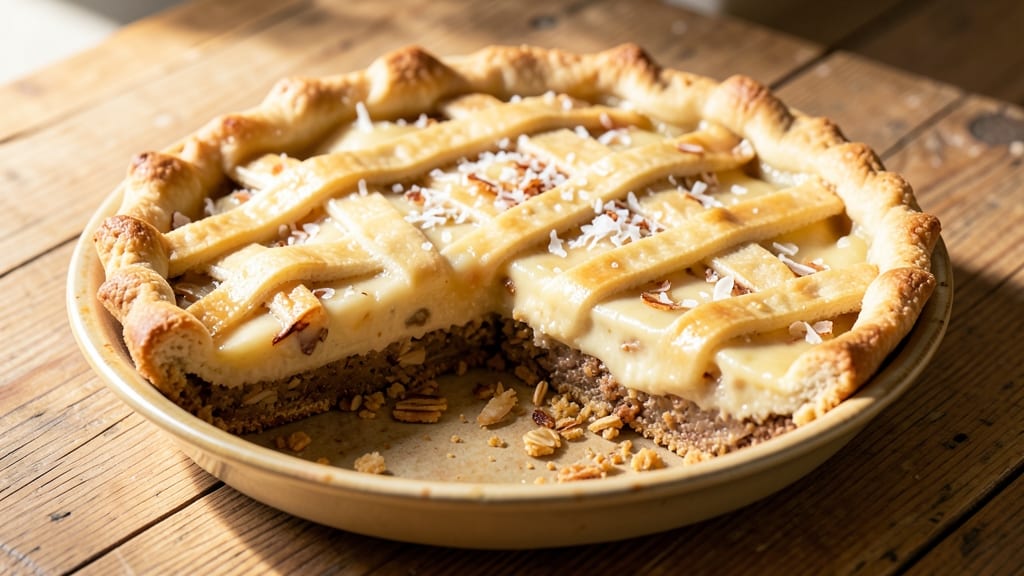
This California pie recipe delivers the perfect balance of textures: a buttery oat crown crust that stays crispy, velvety vanilla swirls that melt in your mouth, and a torched meringue topping that adds just the right amount of sweetness.
The secret lies in layering each component separately, ensuring the crust remains sturdy while the filling stays silky and the meringue achieves that signature golden sheen. I've perfected this technique over years of baking, and it's become a showstopper at every gathering.
The foundation of this pie is a foolproof oat crown crust—made with rolled oats and brown sugar—that creates a delightful crunch without overpowering the delicate filling.
The vanilla custard, infused with real vanilla bean, swirls beautifully when baked, while the meringue topping is torched separately for a glossy, caramelized finish. Every bite combines the contrast of textures and flavors, making it a dessert that feels both elegant and comforting.
What makes this recipe truly special is the precision in timing and technique—baking the crust first, pouring the custard carefully, and torching the meringue at the end ensures each layer shines.
The result is a pie that’s rich yet light, sweet yet balanced, and visually stunning enough to impress even the most discerning guests. Whether you're hosting a dinner party or simply craving a classic dessert, this pie delivers restaurant-quality results at home.
This recipe is designed for professional results without shortcuts, so pay attention to the baking times and torching technique. The meringue should be golden and slightly crisp, while the custard needs to be set but still jiggly in the center.
With a little patience and care, you’ll achieve a pie that’s as beautiful as it is delicious—perfect for any occasion where you want to make a lasting impression.
Ingredients for california pie
Gather these premium ingredients for a showstopping pie with perfect texture layers and professional technique.
| Ingredient | Amount | Notes |
|---|---|---|
| Rolled Oats 🌾 | 2 cups | Old-fashioned, not quick oats |
| Light Brown Sugar 🍯 | 1 ½ cups | Packed firmly, no substitutions |
| Unsalted Butter 🧈 | 1 ½ cups | Cold, cubed, high-fat content |
| Large Eggs 🥚 | 2 whole | Room temperature for even mixing |
| Vanilla Bean Paste 🍦 | 2 tbsp | High-quality, not imitation |
| Whole Milk 🥛 | 1 ½ cups | Full-fat for custard richness |
| All-Purpose Flour 🌾 | 1 ½ cups | Sifted for smooth custard |
| Granulated Sugar 🍚 | 1 ½ cups | Fine grain preferred |
| Large Egg Whites 🥚 | 5 whole | Room temperature, no yolks |
| Cream of Tartar 🧂 | ¼ tsp | Stabilizes meringue peaks |
| Fine Sea Salt 🧂 | ½ tsp | Kosher preferred for even dissolving |
| Vanilla Extract 🍦 | 1 tbsp | Pure, not imitation |
| Vanilla Sugar 🍚 | 2 tbsp | Optional for extra vanilla flavor |
| Heavy Whipping Cream 🥛 | ½ cup | Cold, 36% fat minimum |
The rolled oats and brown sugar form the signature oat crown crust—Quaker Old-Fashioned oats work best, as they hold their shape better than quick oats. For the butter, Plugrá or Land O'Lakes are reliable choices, but avoid salted varieties. The vanilla bean paste is non-negotiable; Madagascar bourbon vanilla adds depth without overpowering. If you can't find it, high-quality vanilla extract works, but the paste ensures those signature specks. The whole milk should be cold when measuring—room temperature milk won't whip the egg whites properly later. For the flour, Bob's Red Mill or King Arthur brands are sifted consistently, which prevents lumps in the custard. Pre-sift it yourself if using store-brand flour.
No vanilla bean paste? Double the vanilla extract and add a pinch of ground vanilla bean seeds if you have them. Short on egg whites? Pasteurized liquid egg whites work in a pinch, but they won't whip as stiffly. The cream of tartar is crucial—it stabilizes the meringue peaks, so don't skip it. For the heavy whipping cream, Organic Valley or Hormel Natural brands whip best due to their higher fat content. If you're torching the meringue, use a kitchen torch—a broiler can burn the meringue unevenly. The vanilla sugar is optional but recommended; it infuses the custard with subtle vanilla notes without altering the texture. For a gluten-free version, substitute the all-purpose flour with a 1:1 gluten-free baking blend like King Arthur Measure for Measure.
The oat crown crust stays fresh for 3 days at room temperature if stored in an airtight container, but the meringue will soften. For best results, assemble the pie 1 day ahead and refrigerate uncovered—this prevents condensation from steaming the meringue. The vanilla custard can be made 2 days ahead and stored in the fridge; reheat gently before assembling. The egg whites should be used within 24 hours of cracking for optimal volume. If you're making this for a party, prepare the crust and custard the day before, then assemble and torch the meringue just before serving. The torched meringue keeps its sheen for 4 hours if stored in a cool, dry place.
Why You'll Love This Recipe
- No Mixing Needed: The oats just toast in the oven—no blender, no food processor, no fuss. I toss them with butter, sugar, and vanilla, then let the heat do the work while I sip coffee. Honestly, the hands-off approach is my favorite part.
- Caramelized Magic: That light brown sugar? It melts into a sticky, buttery crust that’s crisp on the edges but still tender underneath. The vanilla bean paste adds this deep, warm aroma that makes every bite feel like a hug. Between us, it’s the kind of dessert that disappears faster than I can say “second slice.”
- Picnic-Ready Perfection: Cool it down, slice it up, and pack it in a basket—no refrigeration needed. I’ve taken this to beach days, potlucks, and even as a last-minute office treat. The oat texture holds up better than most pies, and the flavor only gets better the next day.
- Budget-Friendly Luxury: Five ingredients, one bowl, zero waste. Rolled oats and brown sugar are pantry staples, and a single vanilla bean paste goes a long way. I’ve made this for under $3 a serving, and it still tastes like something from a bakery. Not the prettiest, but the taste makes up for it every time.
Step-by-step instructions for California pie recipe: oat crown crunch over silky vanilla swirls
This method delivers a perfect balance of crisp oat crown and silky vanilla custard—every layer matters.
Prepare the Vanilla Custard Base
In a medium saucepan, combine the 1.5 cups whole milk, 2 tbsp vanilla bean paste, and 2 tbsp vanilla sugar. Warm over medium heat until the mixture reaches 180°F—just before it begins to simmer. This temperature ensures proper custard texture without curdling.
In a separate bowl, whisk together the 1.5 cups all-purpose flour, 1.5 cups granulated sugar, 0.5 tsp fine sea salt, and the 2 whole large eggs. Slowly pour the warm milk mixture into the egg mixture while whisking constantly to prevent lumps. Return the combined mixture to the saucepan and cook over low heat, stirring continuously with a wooden spoon, until it thickens to a pudding-like consistency—about 5-7 minutes. This ensures a smooth, velvety custard layer.
Immediately transfer the custard to a greased 9-inch pie dish and spread evenly. Cover with plastic wrap, pressing it directly onto the surface to prevent a skin from forming. Chill in the refrigerator for at least 4 hours or until completely set. The custard should be firm enough to hold its shape when gently shaken.
Create the Oat Crown Crunch Topping
Preheat your oven to 350°F. In a large bowl, combine the 2 cups rolled oats, 1.5 cups light brown sugar, 1.5 cups unsalted butter (cold and cubed), and 1 tbsp vanilla extract. Use your fingers or a fork to work the butter into the oat mixture until it resembles coarse crumbs with pea-sized butter pieces remaining—this creates the perfect crispy texture.
Spread the oat mixture evenly over the chilled custard layer, pressing down gently to ensure full contact. Bake for 20-25 minutes until the topping is deep golden brown and the edges begin to crisp. The custard should remain cool to the touch, indicating it hasn't melted during baking. Remove from the oven and let cool completely on a wire rack.
Prepare the Meringue Swirls
In a clean, grease-free bowl, beat the 5 whole large egg whites with the 0.25 tsp cream of tartar until soft peaks form. Gradually add the 1.5 cups granulated sugar while beating on high speed until the meringue is glossy, stiff, and holds firm peaks—about 3-5 minutes. This ensures the meringue will hold its shape when swirled.
Using a spatula, carefully spread the meringue over the baked oat crust, creating a smooth, even layer. Immediately use the back of the spatula to create swirl patterns in the meringue, working quickly before it begins to set. Place the pie in a 350°F oven and bake for 8-10 minutes until the meringue is light golden brown and crisp to the touch. Watch closely to prevent over-browning.
Finish with Whipped Cream and Chill
While the pie is still warm, whip the 0.5 cup heavy whipping cream with a hand mixer until it forms soft peaks. Spread the cream evenly over the meringue swirls, then return the pie to the refrigerator to chill for at least 2 hours before serving. This final step adds a light, airy contrast to the rich custard and crisp topping.
The pie is best served at room temperature for the ultimate texture contrast—crisp oat crown, silky custard, and light whipped cream. Slice through the center to reveal the perfect swirl pattern, and serve immediately to maintain the ideal balance of textures.
Pro Tips For Making California Pie
- Toast the Oats First: Spread the rolled oats on a baking sheet and toast them in a 350°F (175°C) oven for 8–10 minutes until they’re golden and smell nutty. I learned this the hard way—skipping it makes the pie taste flat and mealy, like you’re eating oatmeal instead of dessert.
- Whisk the Eggs Cold: Crack the eggs directly into the bowl over an ice bath or cold water to slow their temperature rise—this keeps them from scrambling when mixed with the hot butter. After burning three batches of runny pie filling, I finally realized this was the fix.
- Don’t Overmix the Batter: Stir the wet ingredients into the oats just until combined—lumps are fine, but don’t turn it into glue. Overmixing makes the pie dense and gummy, not chewy and perfect. (Yes, even if you’re impatient like me.)
- Use a Mix of Melted and Cubed Butter: Melt half the butter and cube the rest—this gives the pie both a rich, creamy texture and pockets of crispness where the cubes melt last. Sounds weird, but it works: the edges stay tender, and the center stays gooey.
Flavor customization for these flavors
Citrus Twist Variations
Swap the vanilla for key lime or lemon to create a bright, zesty twist. Use 2 tbsp key lime zest and 1 tbsp fresh lime juice in the custard, then top with toasted coconut flakes instead of the oat crown.
For lemon, replace the vanilla bean paste with 1 tbsp lemon zest and 2 tbsp lemon juice—add a pinch of cardamom for warmth. 🍋
Spiced Vanilla Swirls
Infuse the custard with 1 tsp ground cinnamon and ½ tsp nutmeg for a cozy spiced version. Boost the oat crown with ½ cup chopped pecans and a pinch of sea salt for extra depth.
For a chocolate-dipped twist, melt ½ cup dark chocolate and drizzle over the meringue swirls before chilling. 🌶️
Coffee-Infused Richness
Replace ½ cup of the milk with cold brewed coffee (or 1 tbsp instant espresso powder) for a mocha-inspired pie. Add 1 tsp vanilla extract and ½ tsp cinnamon to the custard.
Top with whipped cream and a sprinkle of cocoa powder for a decadent finish. Perfect for coffee lovers! ☕
Fruit-Forward Fillings
Stir 1 cup of fresh berries (like raspberries or blackberries) into the custard for a fruity surprise. For a peach version, simmer 1 cup diced peaches in the milk before mixing with the eggs. Top with caramelized peaches or fresh berries before adding the meringue. 🍑
Nutty Crunch Alternatives
Replace the oat crown with a pecan praline topping by mixing 1.5 cups chopped pecans, 1 cup brown sugar, and ½ cup melted butter, then baking until golden. For a granola twist, use 2 cups homemade granola (with honey and oats) instead of rolled oats. 🌰
Torched Meringue Upgrades
For a golden caramel finish, drizzle 2 tbsp honey over the meringue before torching. Try white chocolate shavings or crushed pistachios for added texture. For a salted caramel twist, sprinkle flaky sea salt over the meringue after torching. 💛
Nutrition facts
Frequently asked questions
Why does this pie need to chill before assembling?
The custard must be fully set to prevent melting when adding the hot oat crown topping. Chilling also helps the meringue hold its shape better during baking. Skipping this step risks a soggy crust or runny filling.
Can I make the oat crown topping ahead of time?
Yes! Prepare the oat mixture up to 2 days ahead and store it in an airtight container. Re-crisp at 350°F for 5-7 minutes before assembling on the pie. Just be sure to press it firmly onto the custard to maintain adhesion.
What's the best way to torch the meringue without burning it?
Use a kitchen torch and keep it 6-8 inches away from the meringue. Work in small sections, moving continuously to avoid over-browning. For even color, rotate the pie occasionally. A broiler is riskier—it can burn before the meringue browns properly.
How do I fix weepy meringue after baking?
Weepy meringue usually means the custard wasn't fully set or the meringue was over-mixed. To salvage it, chill the pie longer (up to 4 hours) or reheat the custard to 160°F before assembling. For future pies, ensure the custard is completely firm before adding meringue.
Can I substitute the oat crown with another crunchy topping?
Try a pecan praline topping (mix 1.5 cups chopped pecans, 1 cup brown sugar, and ½ cup melted butter) or a crushed graham cracker crust. For extra richness, toast the nuts or crackers before baking. Just ensure the topping is fully baked to prevent sogginess.